The Armouries saw a new museum as a way of meeting its strategic objectives
1.6 Under the National Heritage Act 1983 the Board of Trustees of the Armouries was established in April 1984 and is responsible for a National Museum of Arms and Armour. The Board's functions are financed primarily by annual grant-in-aid from the Department. The grant for 1999-2000 was £4.1 million, subsequently increased to £5.1 million. The Permanent Secretary of the Department is the Accounting Officer for the appropriation account from which the Armouries' grant is paid. The Permanent Secretary has designated the Master of the Armouries, a post established by statute, as Accounting Officer for the Royal Armouries.
1.7 The National Heritage Act 1983 lays down a number of statutory duties with which the Armouries must comply (Figure 3). In line with these duties the Armouries' mission is to promote in the UK and world-wide the knowledge and appreciation of arms and armour and of the Tower of London through its collections and the expertise of its staff. In addition the Armouries has an operational objective of becoming more financially self-sufficient in the long-term.
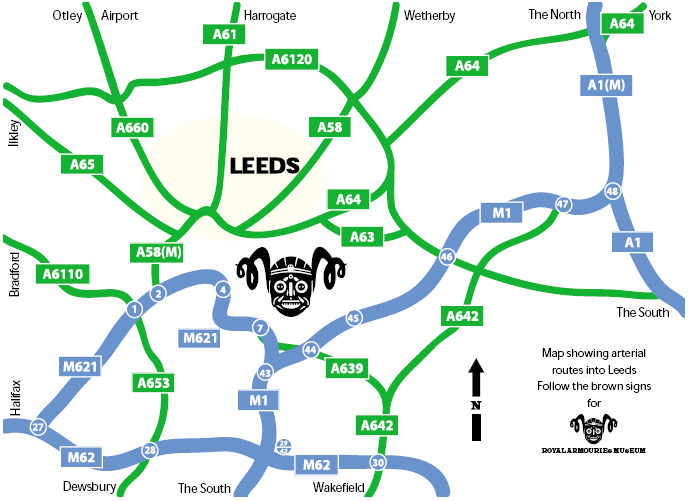
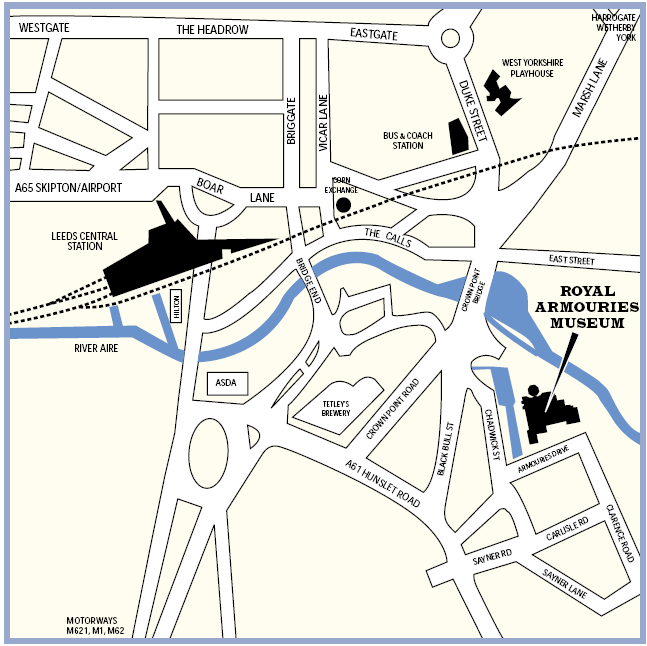
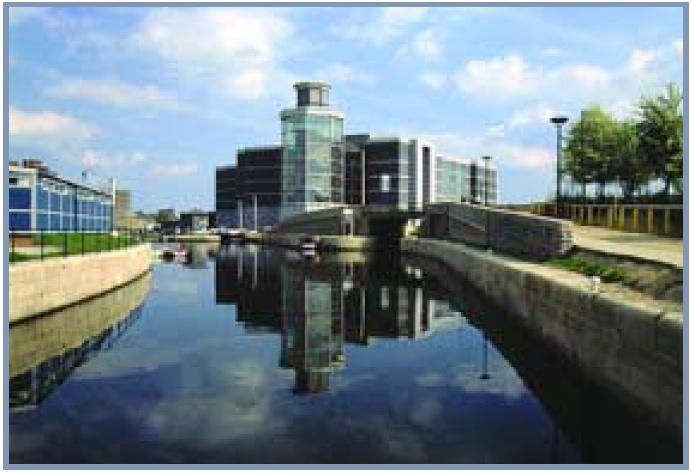
1.8 Until 1993 the Armouries' operations were based at the Tower of London and Fort Nelson (near Portsmouth). In 1990 the Royal Armouries agreed a development strategy, "Strategy 2000", for the future exhibition of its collection of arms and armour, based on the construction of a new museum. To this end in 1991 a search was held to select a site for the new museum. The criteria for selection included the financial support available from the local authority, the location and size of the city, and the proposed site itself. In June 1991, having considered a number of alternative locations, the Trustees selected the Clarence Dock area in Leeds as the site for the new museum (Figure 4). The museum was to be the centrepiece of the redevelopment of a previously industrial and commercial 15 acre waterfront site, which lay within the boundaries of the Leeds Urban Development Area. In addition to the new museum, the redevelopment would provide office space, a hotel, shops, and restaurants. A major factor in selecting the Leeds site was the financial contributions of £5 million from Leeds Development Corporation and £3.5 million from Leeds City Council, which were to be provided on the basis of the regeneration benefits the new museum would bring.
1.9 The Armouries' strategy in seeking a new museum was designed to improve its ability to meet its statutory duties. A new museum would allow it to exhibit the collection to the public and promote the public's enjoyment and understanding of arms and armour, by putting more of its collection on display. The Armouries' collection had been on public view at the Tower of London since the 1600's.
3 |
| The Royal Armouries' statutory duties |
|
| The National Heritage Act 1983 imposes a number of statutory duties on the Royal Armouries. ■ To care for, preserve and add to the objects in its collection of arms, armour and associated objects ■ To secure that the objects are exhibited to the public ■ To secure that the objects are available for inspection or research ■ To maintain records of the collection ■ To generally promote the public's enjoyment and understanding of arms and armour Source: National Heritage Act 1983 |
But space constraints only permitted around 5,000 items, about ten per cent of its collection, to be exhibited. At the same time there was a proposal to relocate the Jewel House within the Tower of London, which required the Armouries to vacate some of its existing accommodation.
1.10 The Armouries also considered that a new museum would allow it to meet its objective of becoming more financially self-sufficient. Grant to the Armouries had been steadily reducing in line with the Department's policy of making heritage bodies more self-sufficient. At the time, in line with other museums, the existing facilities at the Tower were loss-making and the Armouries was receiving grant-in-aid. The Armouries expected that the new museum would be a successful visitor attraction of national and international standing with state of the art presentation techniques. The surpluses from this new museum could therefore help reduce the Armouries' need for grant-in-aid.
1.11 The Armouries was supported in this expectation by studies which showed that it could move from a requirement for grant funding to the making of a surplus through the establishment of a new museum in Leeds. For example, J Henry Schroder Wagg & Co. Limited (Schroders), the financial advisers appointed by the Armouries to develop a form of public/private sector partnership for the project which would maximise private sector involvement and finance, reported in May 1992 that there was a strong financial case for the project to be undertaken. The Armouries would benefit from the potential revenue from the Leeds operation, as well as from the increased revenue at the Tower of London which would arise from the improvement in tourist facilities by the Historic Royal Palaces Agency which could only occur once the Armouries had moved some of its operations to Leeds. Schroders forecast that the project would generate net revenue of £4.2 million a year, although the Department would have to make an up-front contribution of £20 million, half of the estimated costs of construction of the new museum.
1.12 Later in 1992, the Department commissioned further advice on the commercial viability of the new museum. It commissioned MORI to undertake an appraisal of ticket price strategy and expected visitor numbers, and then Grant Leisure to validate the visitor numbers and assess the museum's income potential. Both studies indicated that the operation of the museum, once open, would be commercially viable.
4 |
| The museum's location |
|
|
This photograph appears by kind permission of The Board of the Armouries. |