Appendix 3 The PPP grant
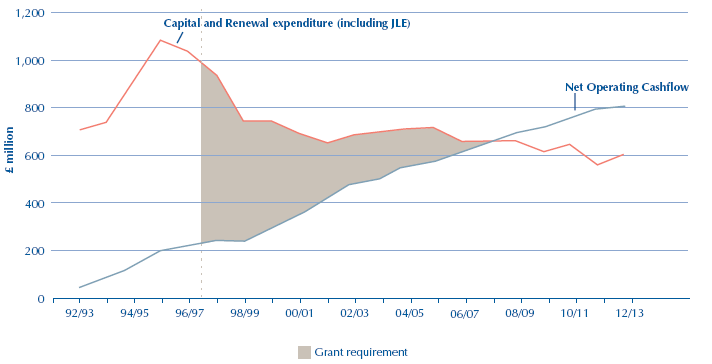
There was a starting point that the PPP would reduce the call on public funds. This was to be achieved through an increasing level of net revenue from LUL and reduced maintenance/upgrade costs due to efficiency savings.
In October 1997 Price Waterhouse reported, extrapolating from London Underground figures, that there were potential efficiency savings and revenue growth that together could eliminate the need for subsidy. Glenda Jackson, then Minister for Transport in London, told the GLA Bill Standing Committee in February 1999 that:
"Our aim is to avoid paying further grant if possible, but that is not a prerequisite of concluding the PPP."
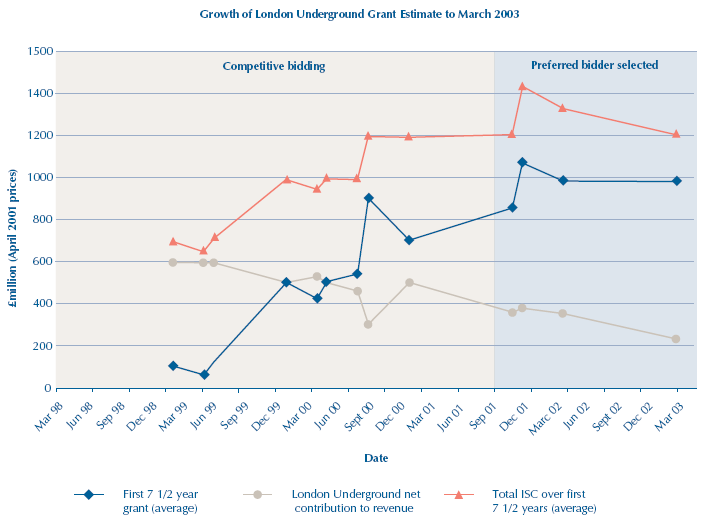
However, as the bidding process evolved, it became apparent that the original revenue projection growth was revealed as overly optimistic and was therefore revised downwards.
|
3.1 |
|
Showing early expectations that LUL net revenue would lower grant over time |
|
|
|
|
|
|
|
Source: Price Waterhouse study (1997) |
|
3.2 |
|
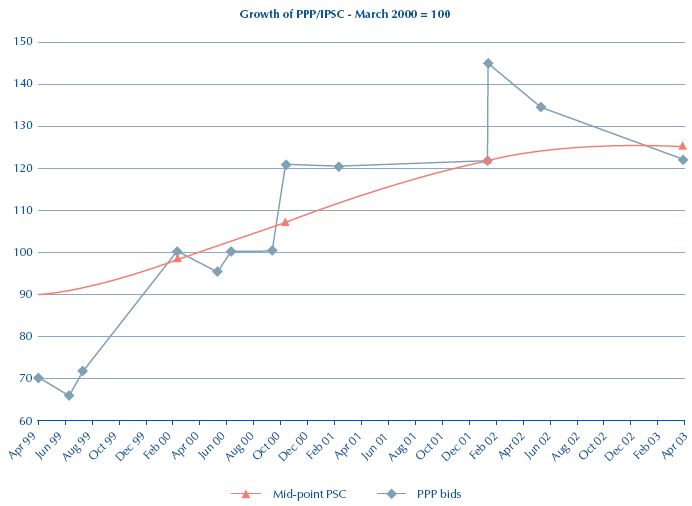
Showing periodic estimates of the increased work required |
|
|
|
Chart uses a relative scale to compare four data points for LUL's 'mid-point' estimate public sector comparator (PSC) cost (averaged over thirty years) with the evolving bid total Infrastructure Service Charge (averaged over seven and a half years). |
|
|
|
|
|
|
|
Source: National Audit Office analysis |
|
3.3 |
|
Collective effect on grant required |
|
|
|
The effect of these parallel dual effects, from lower revenue and increased work, was to substantially increase the level of the average first period grant requirement from the original £60 million to the final £979 million. |
|
|
|
|