Change procedures have already been used in many contracts
1.38 A high proportion of authorities (89 per cent) said their contracts included procedures for dealing with change. Although most PFI contracts have not been in existence for long, 55 per cent of these authorities have already used the change procedures to update their contracts. Most of the changes made relate to changes in services, the
9 |
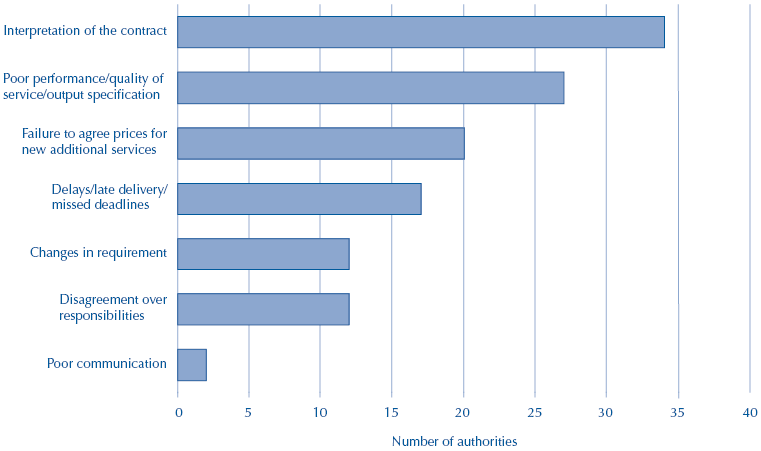
| Main reasons for disputes |
|
|
|
|
| Source: National Audit Office survey of authorities |
introduction of new services, and additional works and changes to the design of buildings. The fact that so many changes have already been made indicates the importance of including agreed change procedures in the contract. Using the experience of early PFI projects to get the initial procurement right may help to reduce the need for contract changes on future projects although some changes are still likely to arise. Of the contractors who indicated their degree of satisfaction with the change procedures, 82 per cent considered they worked satisfactorily or better but 18 per cent considered that they worked poorly or worse.
1.39 Once the contracted services have been brought into operation greater focus is often then given to considering the possible introduction of new services, particularly in the field of information technology and communications, where the market frequently develops new products. A number of authorities had sought to protect their interests arising from change by contractual arrangements which set out the basis of how new services would be charged for or which allowed the prices of new services to be benchmarked. Perceived high charges for additional services were, however, an issue which some authorities said had caused them to reassess the value for money of their contract. Given the long term nature of PFI contracts, authorities should ensure that they have change procedures which give them the flexibility to introduce new services where this will be advantageous but which will also ensure that such additional services will be value for money.