APPENDIX SIX Tied supply chains
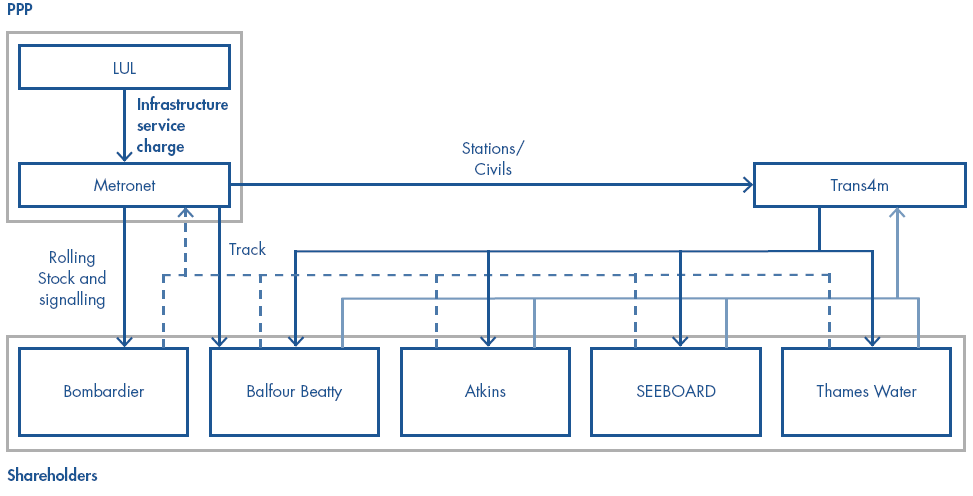
Metronet operated as a tied supply chain (Figure 26). This means that its shareholders were also its main suppliers, receiving approximately 60 per cent of the volume of capital spending contracts.
As the figure shows, Metronet's capital delivery obligations were split into different areas. Bombardier had the rolling stock and signalling work, Balfour Beatty had track, and Trans4m, a consortium between four of the shareholders (excluding Bombardier), was given the stations and civils work.
The overspending and under-delivery problems that Metronet faced were heavily concentrated on three of its four main capital spending areas, with much greater problems on the Balfour Beatty and Trans4m work than on the Bombardier work. The key difference between these areas was in the contract specifications. Bombardier's contract was output-based and was specified in terms of an improvement of Journey Time Capability and an increase in capacity. This meant that Bombardier had to achieve clear milestones before receiving payment of a firm price subject to agreed indexation.
Trans4m's contract for stations, on the other hand, was input-based and Trans4m's payment was simply based on the actual costs of works undertaken. Furthermore, as detailed in Appendix 5, the contractual scope for stations work was vague and open to interpretation.
26 | Metronet tied supply chain structure |
Source: National Audit Office | |