Time taken to tender new deals
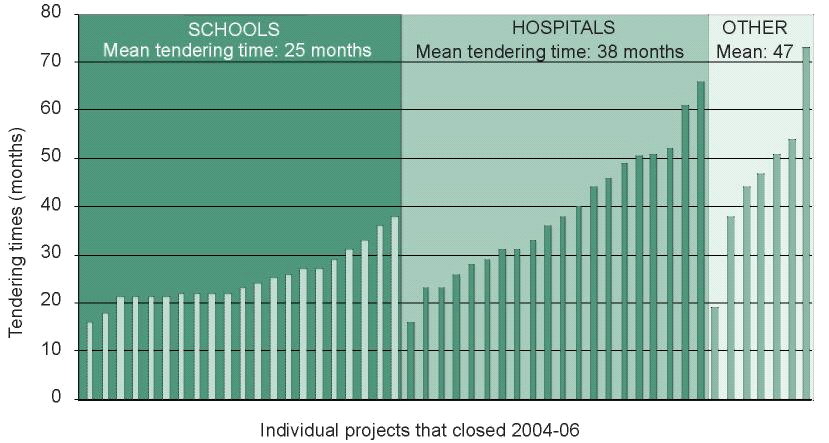
8. The average tendering time from initial advertisement to the close of a deal for PFI projects in 2004-2006 was 34 months, compared to 33 months for projects that closed prior to 2004, although there were significant differences even within sectors (Figure 2). The shortest overall tendering period was 16 months, whilst the longest was 73 months. The average cost of external advice for each project was £3 million, reflecting the length of the process, and delays to the schemes (as well as putting bidders off) cost the taxpayer at least £67 million in total.11
9. Such extended procurement periods and high costs highlight the complexity of negotiating PFI deals and the fact that reasons for delays are sometimes unforeseeable. The C&AG's report concluded that in most cases, the major causes of delay were either avoidable or could have been mitigated by the public sector without compromising value for money.12
Figure 2: The length of tendering varied widely within sectors
Source: National Audit Office
10. Causes of delay that could be avoided by the public sector include insufficient specifications prior to going to market, changes to the scope and design of projects, and poor process management. The Treasury agreed that its performance in working to reduce tendering times could be improved. However, it pointed to sector-specific delivery models such as Building Schools for the Future and Partnerships for Health, which have average tendering times of 22 and 20 months respectively, to demonstrate that there have been some signs of progress. Sector-specific targets had also been introduced in schools, street lighting and waste PFI deals.13
___________________________________________________________________
11 C&AG's Report (1), paras 3.1, 3.2-3.24
12 C&AG's Report (1), para 3.7; Q 14