Negotiations with a single bidder for a new deal
12. As PFI projects tend to be complex procurements, it is usual for the public sector to invite bids and then choose a single, preferred bidder with whom to negotiate in detail. Even if there is a strong competitive process during tendering or value testing, the way in which negotiations are handled by the public sector after the competition has ended can be crucial to the ultimate value for money of a PFI deal. One third of the projects examined in the C&AG's report on tendering made significant changes to the project scope during negotiations with a single, preferred bidder. On average, the value of these changes (both upwards and downwards) was £4 million per project per year, equivalent to 17% of the value of each project.15
13. In the past, public authorities have requested significant changes to the design solution, the addition or removal of major equipment components, changes to the agreed services to be provided and major changes to the agreed allocation of risk. The process of Competitive Dialogue now specifies that bidders can only be asked to 'fine tune, specify and clarify their bids' once the competitive phase has concluded. The Treasury told us that it was not desirable for changes to be made after competitive tendering had ended but considered that the introduction of the Competitive Dialogue process would dramatically reduce the period where there was only one bidder (Figure 3), although it was too early to say whether total tendering times would also reduce.16
Figure 3: Preferred bidder negotiations for projects were often lengthy
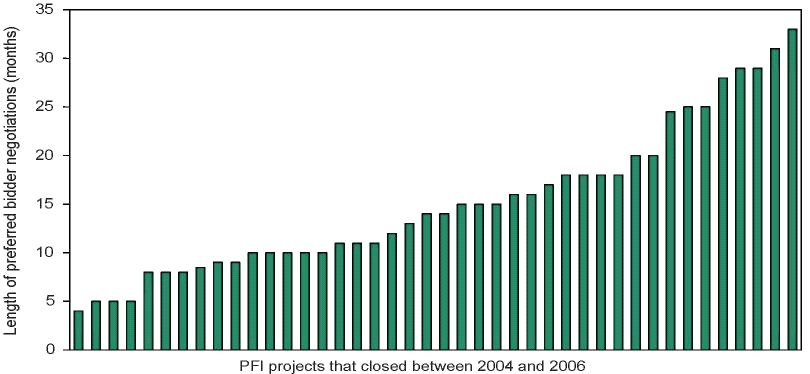
Source: National Audit Office
___________________________________________________________________
15 C&AG's Report (1), paras 3.27-3.29
16 Qq 14, 62-63, 85-88, 130; C&AG's Report (1), paras 1.6, 3.29