APPENDIX THREE Case study examples – the Sussex Partnership NHS Trust and the Defence Fixed Telecommunications Service
Figure 6 in the report shows a typical organisational structure of a PFI project and Figure 5 in the report demonstrates the alternative contractual options of the value testing process. In practice there will be variances from these two standards. The structures of a PFI deal will vary depending on the funding of the SPV, the method of delivery and the type of services being delivered. The method of value testing will also vary as it will be dependent on the terms in the contract and how the parties decide to progress the process, this will include the responsibilities of each of the parties.
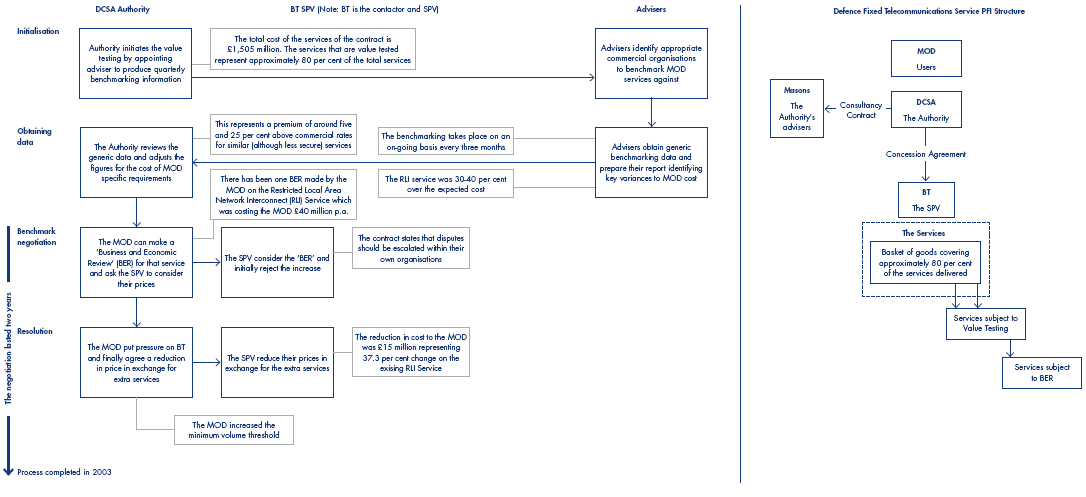
Variances from these standards were evidenced during the course of our fieldwork from our discussions with the project teams. Two particular examples show how the process can vary from the standard and also highlight the complexity of value testing. The first case study is the Sussex Partnership NHS Trust where services were benchmarked, market tested and finally brought in-house by the Trust. The second example is the Defence Fixed Telecommunications Service contract. This case study example involves the benchmarking of non-traditional soft FM services in the form of telecommunications services. In the case of the Defence Fixed Telecommunications Service the contract mechanism uses a 'Business and Economic Review' as the method for the Authority to challenge the prices of its contractor. This challenge was based on the evidence of a benchmarking report carried out by external advisers.
Both of the case studies are explored in more detail in Figures 22 and 23 on pages 42 to 45.
[Access 22 Sussex Partnership NHS Trust Value Testing Process – PDF]
|
23 |
Defence Fixed Telecommunications Service value Testing Process |
|
|
|
|
Source: National Audit Office |
|