The first sale process was unsuccessful
1.1 When the Millennium Exhibition project was first conceived in the mid 1990s, the expectation had been that at the end of its year of operation the Dome would be demolished or moved, and that the cleared site would be sold for redevelopment under an existing masterplan for the Greenwich Peninsula. However, in 1997, the incoming Government decided that the Millennium Experience should continue as a 'lasting legacy' in Greenwich. In 1998, the decision was taken to retain the Dome. This resulted in changes to the specification of the Dome, such as a more durable fabric skin, to ensure that it would last at least 20 years. English Partnerships, the national regeneration agency now sponsored by the Office of the Deputy Prime Minister and owners of the site, were asked to find a sustainable long term use for the structure, recognising its status as an iconic building.
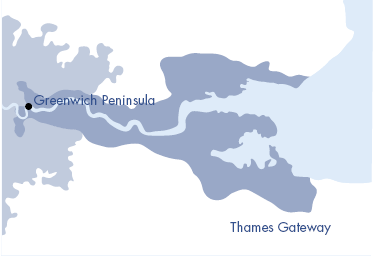
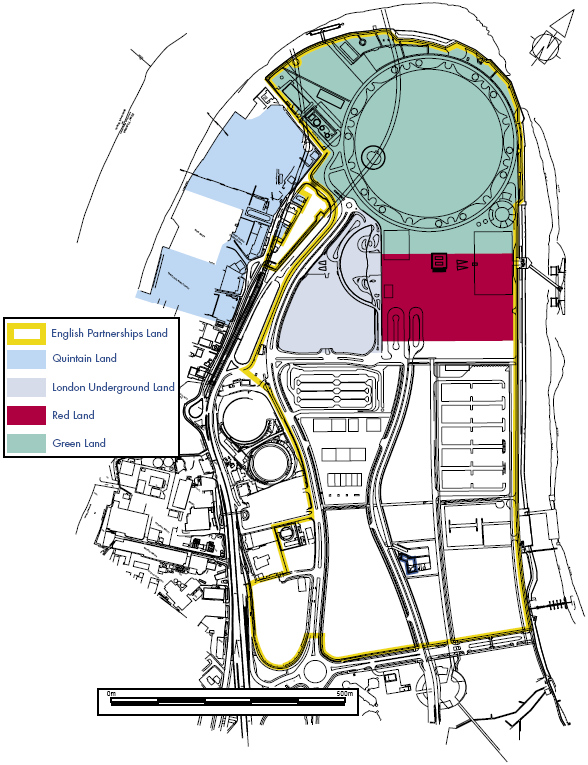
1.2 The Dome is located on a site of great planning importance. The Greenwich Peninsula is at the western end of the Thames Gateway, an area proposed for major economic regeneration and development in the South East of England over the next 20 years, (See Figure 2). To the north, west and east of the site lie Canary Wharf and the London Docklands. Public investment in improved transport links, principally the Jubilee Line extension, and in remediation, servicing and landscaping works, has opened up the site for intensive and profitable redevelopment. This will mainly be commercial and residential property, to complete the work begun by English Partnerships at their new Millennium Village and associated commercial developments at the southern end of the Peninsula. Though English Partnerships own most of the land on the Peninsula, important areas are owned by London Underground Limited and by private companies (See Figure 3).
2 | The location of the Greenwich Peninsula |
The Greenwich Peninsula is located in East London and is in a major regeneration area, the Thames Gateway.
Source: Office of the Deputy Prime Minister | |
3 | The North Greenwich Peninsula |
English Partnerships own most of the land on the Peninsula, important areas are owned by London Underground Limited and by private companies.
Source: English Partnerships | |
1.3 The initial competition for the Millennium Dome began in March 1999 but did not produce a deal (See Figure 4 overleaf). The first selected buyer, Dome Europe, had intended to continue operating the Dome as a visitor attraction but withdrew in September 2000 citing unacceptable commercial uncertainties over the assets and liabilities of the New Millennium Experience Company which operated the Dome. Ministers from several departments involved in the Millennium Dome project2 then selected a replacement bidder, Legacy plc, which proposed developing a high technology business park within the Dome. In February 2001 the Government withdrew Legacy's exclusive negotiating rights, mainly because their professional advisers and English Partnerships had grave doubts that Legacy had secured sufficient pre-lets and financial backing, and that their scheme would give the taxpayer a good deal from shared profits over the lifetime of the project.
1.4 The costs of running the original competition were £6.7 million, mainly in fees to professional advisers to English Partnerships, (See Figure 5 on page 9). Dome Europe and Legacy also committed substantial resources to the exercise. Dome Europe, a vehicle of the Nomura Investment Bank, claimed to have spent some £10 million working up detailed proposals involving a team of up to 200 people. Legacy stated that they spent a similar amount.
1.5 In February 2001 English Partnerships and the Department considered a report, issued by English Partnerships' Competition Director, on lessons learned from the failure of the original process. These conclusions were taken into account in designing a new approach to finding a buyer.
__________________________________________________________________________________
2 Identified in the Glossary at Appendix 2.