Executive Summary
1 GCHQ provides intelligence services as directed by the Government. Since 1952 GCHQ has occupied - and developed piecemeal - two sites on opposite sides of Cheltenham.
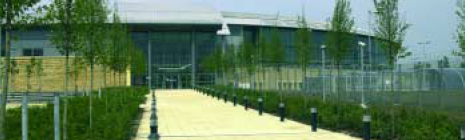
2 In 1997 GCHQ decided on an updated strategy to redevelop its Cheltenham accommodation and, in June 2000, signed a contract under the Private Finance Initiative with IAS Limited, a newly formed company set up for the purpose by a consortium of construction and specialist firms. The contract was a deal for the provision of serviced accommodation in a new building for a period of some 30 years.
3 The net present cost of the contract over thirty years is estimated at £489 million, based on payment of £46 million annually, to start when the new building is ready for occupation. Eventually GCHQ expects to be able to vacate both its existing sites, which would then be sold, and locate its entire Cheltenham operation, some 4000 staff, in the new building.
4 GCHQ's operations are highly dependent on very large and complex computer systems. These will need to be moved to the new building in a process known as technical transition. Technical transition is not part of the PFI deal; GCHQ is managing it, not IAS. But it will need to be carefully co-ordinated with the move into the new building that IAS is providing. The combined project, comprising the PFI deal, technical transition and other changes, is now known as the New Accommodation Programme.
5 GCHQ's original estimate for technical transition was £40 million. However, during work to ensure millennium compliance of its computer systems, it found that technical transition would be a much more complex and expensive undertaking and revised its estimate to £450 million. To render technical transition affordable, GCHQ is now planning to phase the process, but it will nevertheless cost over £300 million. The estimated combined cost of the PFI deal and technical transition is £783 million (Net Present Value) over thirty years. This total excludes GCHQ's own manpower and associated running costs that are provided from its existing budgets.
6 We examined the effectiveness of GCHQ's conduct of the PFI procurement and whether GCHQ's New Accommodation Programme is likely to deliver value for money. We concluded:
a GCHQ pursued a PFI deal covering the whole of its Cheltenham operations as a consequence of the then government policy to test all capital expenditure for suitability as PFI projects. Piecemeal redevelopment of the Cheltenham sites would not have been feasible through a PFI approach (Part 1);
b GCHQ set about what was then seen as a PFI building project in a sensible manner, leading to the selection of IAS as preferred bidder (Part 2);
c Subsequent negotiation with IAS to resolve non-compliances in its bid and changes in scope led to increased costs. Despite the necessarily noncompetitive nature of some of these negotiations, GCHQ was able to satisfy itself that the cost increases were reasonable (Part 3);
d GCHQ's original options appraisal had been made with little knowledge of the real costs of technical transition. Its recognition that the costs of technical transition would be far higher than expected prompted a review of the way the PFI project for a new building was being managed. Technical transition and the new building are now seen as components of the whole New Accommodation Programme (Part 4);
e The New Accommodation Programme, as now conceived, is on track to deliver, to time and to budget, both the new building and the first stages of technical transition. GCHQ is, moreover, working to ensure that the planned business benefits are realised, and the potential disbenefits are minimised. In addition to these specific benefits and disbenefits, the PFI deal brings the generic benefits and disbenefits associated with such deals for headquarters buildings. When Ministers agreed to the final PFI deal at a price largely determined by competition, they had full knowledge of the cost of technical transition. GCHQ also considered that the New Accommodation Programme would cost less than its best conventionally financed alternative and would deliver greater benefits. It is only possible to speculate whether Ministers would have approved the wholesale redevelopment of the Cheltenham sites had they known the full cost of technical transition when they considered GCHQ's original option appraisal. In GCHQ's view, even with the benefit of hindsight, the option selected, and now being implemented, was the one offering the greatest overall value for money (Part 5).