NS&I would not have had the resources
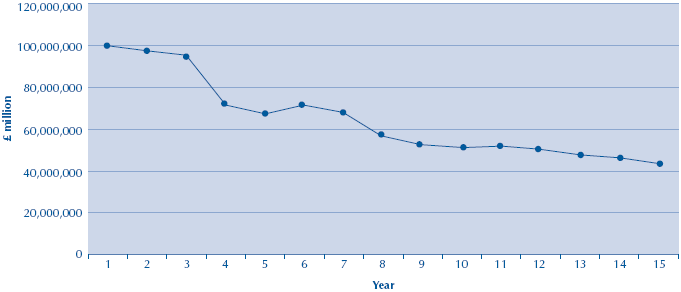
1.23 NS&I would not have been able to afford the business transformation proposed by SBS. The contract delivers everything that was included in NS&I's operations budget before April 1999 plus many new activities such as the call centre and the data warehouse. The annual NS&I operations budget was about £100 million in cash costs before the partnership. During the first three years of the contract, NS&I paid unitary charges of £102.2 million, £101.6 million and £100.9 million respectively. The unitary charge decreases to £72 million in the fourth year, with further decreases over the remaining contract term as shown in Figure 4.
|
4 |
|
Reduction in unitary charge over 15 years |
|
|
|
The original contract was for ten years with the option to extend it for a further five years. The unitary charge in years 11 to 15 will remain the same as that in SBS's original bid. |
|
|
|
 |
|
|
|
Source: NS&I |
1.24 When the deal was signed, SBS's price showed savings of £158 million in net present cost terms over 15 years compared to the cost of keeping the business within the public sector. During the first three years of the contract the costs to SBS of transforming the business were substantially higher than planned. This suggests that at the time of the outsourcing, NS&I also significantly underestimated the costs of modernising the business within the public sector. NS&I now estimates that the net present costs of running the business without the partnership would have been £336 million higher over 15 years.
1.25 Despite SBS not reducing the costs of running NS&I's operations as much and as quickly as it planned, for example, through not achieving the early launch of low cost sales channels, there has been limited short term impact on NS&I or its customers. The earlier launch of low cost sales channels, however, would have benefited both parties, by increasing NS&I's ability to add value through the pace of the delivery of change and by enhancing the options for its customers.