DELAYS
The average delay per flight attributable to NATS for the calendar year to date is 2.79 minutes, compared to 1.66 minutes in the corresponding period in 2001. NATS does not regard this as an acceptable performance. In part, it reflects the introduction of Swanwick into operational service in January, when flow rates were reduced to allow controllers to familiarise themselves fully with the new systems. However our performance in the summer was also disappointing, reflecting a shortage of manpower and capacity on key sectors. As a consequence, we are reviewing options for increasing manpower numbers and productivity. In the medium-term, we are increasing the overall number of controllers through our ongoing recruitment campaign, and aim to improve success rates through new methods of controller training including the increasing use of simulators. To meet requirements in the shorter term, we have recently concluded and implemented a new agreement with our controllers on voluntary overtime arrangements.
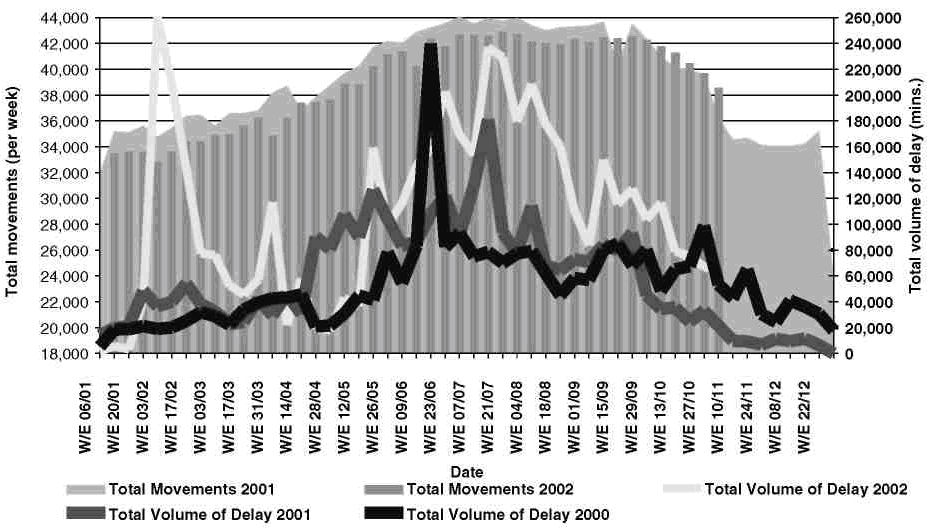
The chart below illustrates the progress we have made in reducing the delays to our customers in the latter part of the year. We are confident that these improvements will continue through the winter months and that we will have a range of measures in place to ensure a real improvement in performance in time for the start of next year's peak season.
Traffic movements compared to the extent of delay attributable to NATS
The immediate future is likely to remain challenging as airlines adjust to higher oil prices, the slow recovery of the world economy and the possibility of conflict in the Gulf. Despite the company's financial difficulties, the institutional arrangements established by the PPP have proved their resilience.
7 November 2002