The cost of PFI
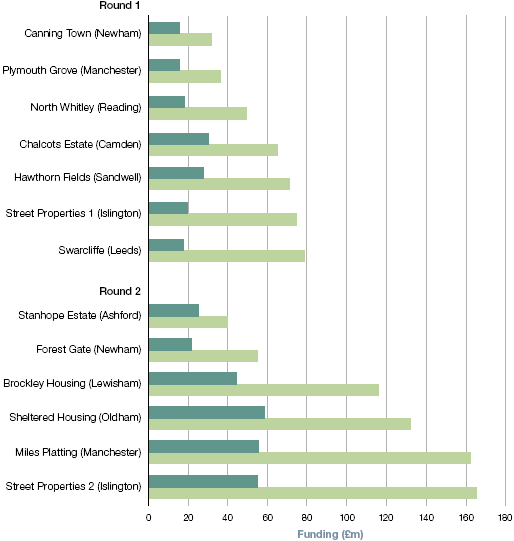
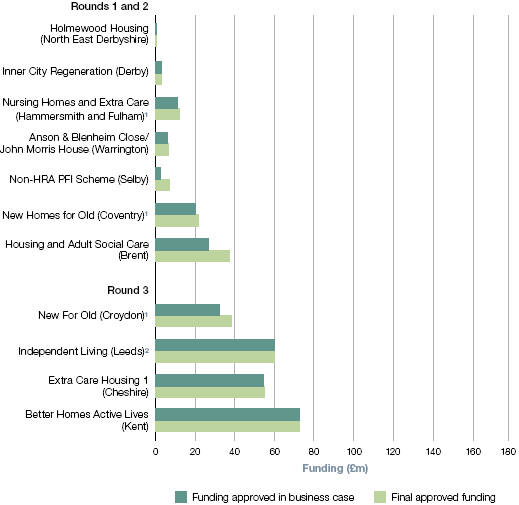
2.4 Capital cost estimates in approved business cases were, for early council housing projects, unrealistically low leading to increases in central funding for the projects of between 57 and 338 per cent during procurement (Figure 5 overleaf). Only two non-council social housing projects saw significant cost increases as these are more predictable and so easier to cost. Overall 21 of the 25 projects signed to date, have experienced cost increases, 12 of which were over 100 per cent. In awarding additional funding, the Department told us that it ensured projects still represented value for money. No projects have received additional central funding after contracts have been signed.
Figure 5 Council housing projects experienced significant increases in costs during procurement Projects
Non-council social housing projects experienced more limited cost increases Projects
|
NOTE 1 These projects received part of their funding from other departments; for details see project details at www.nao.org.uk/pfi-housing-2010. 2 Independent Living received an additional £4.5 million from the Department for Education after the contract was awarded to build an additional asset. Source: National Audit Office analysis of data from the Department for Communities and Local Government |
2.5 The Department told us that the main reason for underestimating costs in early rounds was that housing was a new PFI sector: experience and specific guidance did not exist at this stage. A particular complexity of PFI for local authorities, their advisers, the market and the Department, was achieving a robust cost assessment for projects at the outset. It took some time for those involved to develop their understanding of stock condition issues, risks and risk pricing for PFI. We previously highlighted the risk to value for money where Departments have insufficient asset or service data in our report on the Allocation and Management of Risk in Ministry of Defence PFI projects.8 This is a particular risk in housing when refurbishing existing stock where the condition may not be fully known and readily costed. The Department was slower than it should have been in ensuring lessons were learnt between rounds.
2.6 The Department has implemented a number of changes to improve business cases. The Housing PFI Procurement Pack was published in November 2004. Subsequent developments include the formation of the Central Private Finance Unit, development of a new financial model and the recruitment of transactors: individuals with commercial expertise who act as a critical friend to a project to try and smooth the procurement process.
2.7 The Department told us that cost estimates are now more robust, largely because local authorities spend more time developing business cases before they start the PFI tendering process. Only a few projects have been signed after round two, making it difficult to assess whether cost estimating has improved although later projects have seen fewer cost increases during procurement to date. This may partly be due to the Department's decision only to allow increases in exceptional cases.
______________________________________________________________________________________
8 See National Audit Office report, HC 343 2007-08, 30 October 2008.