There were nine months of exclusive negotiation with BT
2.32 When the Department selected BT as preferred bidder in November 1996, they expected to let the contract by early 1997. Many detailed aspects of the contract, however, remained to be finalised. The Department began exclusive negotiations with BT which were to last for nine months until the contract was signed in July 1997. The terms negotiated during this period included the details of price indexation, compensation for poor performance, and the arrangements for a further competition at the end of the contract period. The Department obtained some changes in their favour and conceded on others. While the level of concessions was not unreasonable, there were some potentially onerous terms, tabled earlier by BT, which remained unchanged. For example, BT can make additional charges if service delivery is outside their normal delivery method (Figure 7 and Appendix 3, Risk 6). But BT and the Department agree that this will only take effect if the Department directs BT to operate in such a way.
2.33 During this period the prices of some services changed. For example, the Department managed to negotiate a lower tariff for the UNITER service. The tariffs for the Local Area Network Interconnect services (Figure 2), however, increased during this period. This was a new service and the Department were not certain of their exact needs, so they had invited bidders to tender broad estimated prices for the services. This meant there was only limited competition for the services.
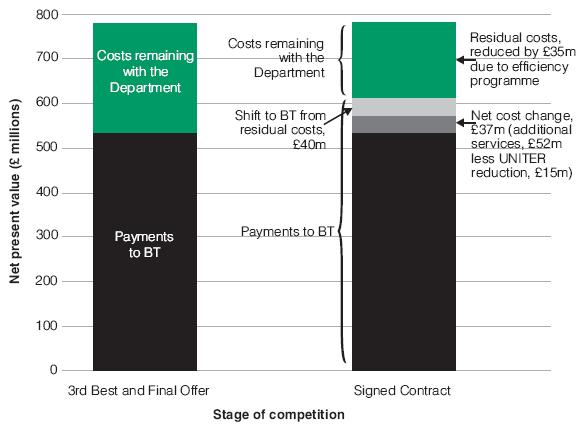
2.34 When BT had become preferred bidder the Department had estimated the total project cost at£781 million in present values, comprising payments to BT and residual costs remaining with the Department. The Department identified that the expected payments to BT had risen by £77 million during the subsequent negotiations. Around £67 million of the increase was due to the inclusion in the project of additional services, and earlier than planned transfer to BT of responsibilities for the Circuit Switched and Point to Point Services offset by a reduction in UNITER requirements. The Department's residual costs had, however, decreased by £40 million as a result of these changes. After taking account of other ongoing cost reductions of £35 million the Department reduced their estimate of the total project cost increase to some £2 million (Figure 11). Around 90 per cent of the increase in payments to BT related to additional services purchased at tariffs determined in the competition. On the basis of this, and a reduction in the costs of UNITER, the Department consider that a small improvement in value for money was achieved.
Changes in total programme and contract costs and costs remaining with the Department
|
|
|
Figure 11 |
| |
|
| |
| The figure shows that changes in specifications and scope of the project meant there was an increase in payments to BT of £77 million during the final negotiations. £40 million of this represented a shift from residual costs to BT payments so had no overall impact on the estimated total project costs. Additional services costing £52 million were offset by a reduction of £15 million in the cost of maintaining UNITER. There were also reductions of £35 million in residual fixed telecommunications costs, due to the Department's ongoing efficiency programmes. This left a net increase in project cost of £2 million (Appendix 5).
| |
Source: Ministry of Defence/National Audit Office |
| |
2.35 In addition to the financial savings achieved, the contract contains a number of non-financial efficiencies and innovations for users and managers, as shown in Figure 12.
|
| |
Figure 12 | Summary of main innovations under the contract | |
The contract provides many improvements in addition to the direct financial savings. | ||
| Innovation | |
Improvements for users of the services | ■ Common numbering plan ■ Common telecommunications standards ■ Improved service directory ■ New secure interconnect system for local area networks (Local Area Network Interconnect) ■ Single point of contact to order new services, change existing services and report faults ■ Improved security ■ Improved co-ordination between the three Armed Services and central administration ■ Quicker introduction of new services ■ Communication of costs of telecommunications to users | |
Improvements for managers of the services | ■ Single management organisation (DCSA) with greater flexibility and focus ■ Ability to deliver solutions across all Armed Services from a single headquarters ■ Improved handling of service orders as finance and contracts staff now located together ■ More predictable costs ■ More accurate records of telecommunications requirements and costs ■ Better future planning | |
Source: Ministry of Defence | ||