The varying interests of police forces and authorities were difficult to manage
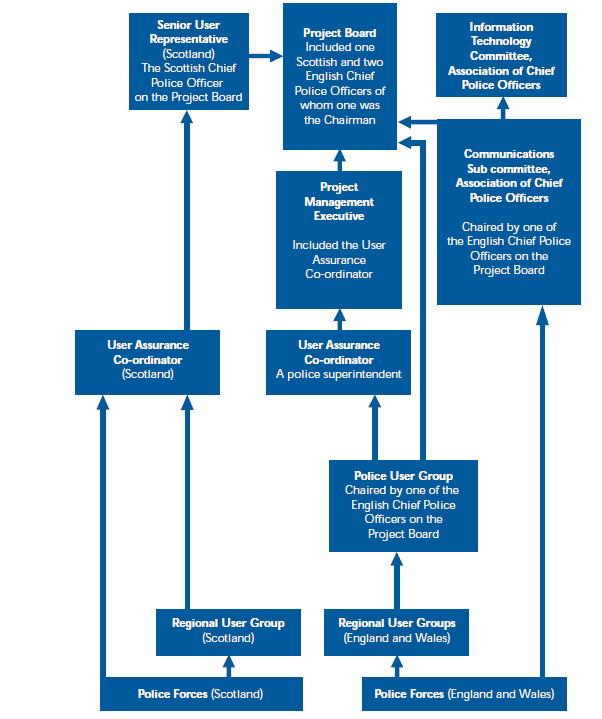
2.36 Throughout the procurement PITO kept chief police officers informed of progress. This was achieved through the inclusion of two chief police officers on the project board, one of whom was chairman, presentations to the Association of Chief Police Officers and regular written updates from the project director (Figure 12 shows the organisation structure of the police involvement in the procurement). Although forces were generally supportive of the project, they did express concerns about the affordability of Airwave. During the negotiations, PITO attempted to use these concerns to gain more competitive pricing from O2. While all parties accepted that the proportion of the police budget required to pay for a modern digital radio service would be more than the then current allocation, it was assumed that O2 did not know what percentage would be acceptable. This strategy unravelled, when in June 1999, PITO considered that O2 had gauged this level to be two per cent of the police budget.
2.37 It was important that the police authorities were kept informed of progress because each police authority, rather than each police force, would sign the local service contract (Figure 13 overleaf shows the position of police authorities in managing the budgets of police forces). PITO therefore invited authority representatives to top-level meetings and the Association of Police Authorities was given a permanent seat on the Project Board. Detailed discussions with authorities were delayed at their request until the costs of Airwave became clearer. As negotiations proceeded, several authorities refused to accept the Airwave service on local value for money grounds. O2 became aware of the problem, which created some uncertainty within the company about the take up of the service. This uncertainty eventually became a price affecting risk that PITO neutralised by agreeing to pay for the Core Service regardless of police take-up.
|
12 |
|
Involvement of police forces in the procurement |
|
Source: PITO |