Initial procurement costs
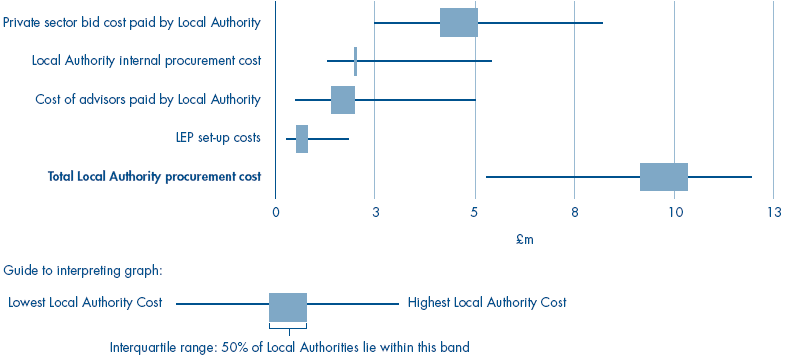
3.23 Once established, a LEP can lead to cost savings in each of the projects it develops, but the costs of establishing the first LEPs and designing their first projects have been higher than they need to be (Figure 17). Accurate data is scarce as Local Authorities record costs differently or not at all. But we estimate that for the first fifteen LEPs the combined total cost of the Local Authority's and the winning bidder's staff time, consultants and legal costs averaged between £9 and £10 million. This total combined cost covers the costs of designing the first few schools, procuring a private sector partner (the Local Authority's staff and consultants costs) and legal costs associated with setting up the LEP. Figure 17 shows the interquartile range of estimates for individual projects provided by Local Authorities and includes:
■ £2 million of their own costs;
■ £1 to £2 million on Local Authority consultants;
■ £4 to £5 million of the private sector's costs paid by the Local Authority through the contracts; and
■ £0.5-£0.8 million of legal costs to set up the company structures.
3.24 A large proportion (£1 to £2 million) of the private sector's costs is for the development of designs for the first schools which are built once the LEP is established. Local Authorities will pay additional costs to the LEP for the development of subsequent projects.
|
17 |
Initial procurement costs to establish LEPs (including designs for the first schools) |
|
Source: These figures are Local Authority own estimates from 9 out of 15 LEPs established to date. Local Authority estimates may contain different elements and not be strictly comparable. We therefore use them as only a rough guide. |
|
3.25 We believe that Local Authorities should be able to establish a LEP and design the first few schools for an average of £6.5 million (Appendix 3). Leeds City Council estimates that it spent £5.3 million setting up its LEP. There are a number of reasons why costs have been high so far.
i Local Authorities have spent a considerable amount on pre-procurement BSF planning, mainly on education and design advisers. They tend to include this spending within their estimates of BSF procurement costs, but not in their assessment of non-BSF procurement.
ii Most Local Authorities experienced avoidable delay in their procurement (although no more than previous school PFI deals). A major factor in this delay was insufficient capacity within the Local Authority (see paragraph 3.11).
iii Insufficient internal capacity within Local Authorities also led many to rely extensively on consultants for key posts such as the project manager and project director, significantly increasing their costs.
iv Some Local Authorities have included the design of a large number of schools (up to eleven in the case of Kent) in the procurement stage. The design of schools during procurement is likely to be more expensive than design after the LEP is established, because each bidder produces designs which are then assessed by the public sector. Design during procurement means, however, that those schools can be started more quickly.
v Despite PfS introducing standardised documentation, Local Authorities and bidders altered it for their own purposes and developed new documentation, requiring extensive legal and commercial advice. PfS has since launched a new process to agree derogations from standard contracts which it hopes will reduce the costs and time of agreeing terms and conditions.
3.26 The cost to bidders is also high compared to other procurement methods. In 2008, PfS commissioned PwC to review the procurement process with the aim of reducing bidder's costs. PwC recommended cutting some elements of the process and reducing the number of schools designed during the competition process from three to two. It estimates that such reductions would save £250 million of bidders' costs over the programme.
3.27 In our case studies, Local Authorities not using a LEP told us they had also experienced high costs of procurement, for similar reasons to those experienced by those procuring a LEP.