Although relationships between the public and private sectors are generally good, this was not always true when making changes
3.12 Overall, we found that relationships between the public and private sectors were usually good or excellent in PFI deals (Figure 15). This is consistent with previous research, and it is critical to the ultimate success of the operational phase of a PFI contract.21
15 | Relationships between the public and private sectors were good or excellent in two-thirds of PFI projects in 2006 |
| |
Source: National Audit Office survey 2007 | |
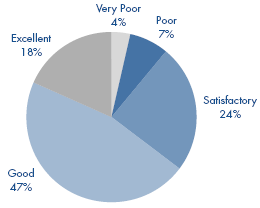
3.13 However, this overall picture did not always correspond to actual experiences of making changes. In response to our survey, half of public sector contract managers who described their relationships with their private sector counterparts overall as good or excellent nevertheless raised issues of cost and time with the change process.
"The key is for better partnership working. I think if you can get that you can work around the contract." NAO focus group attendees |
3.14 We found examples of a genuine partnership ethos displayed by private sector contractors in relation to change requests. A simple example is the practice of not charging for every change request. Some SPVs were willing to waive fees for small changes where they felt the request was minimal and a normal part of the day-to-day operation of the building.22 Another example is where SPVs are proactive in looking for areas where changes could benefit the public sector authority and acting as an arbiter in cases of dispute between the public sector authority and the sub-contractors. Figure 16, based on visits to operational projects, sums up how both effective public sector management and a partnership ethos from the private sector are needed for good value changes to be achieved.
16 | Typo logy of change process | |||||||||||
|
|
|
|
|
|
|
|
|
| |||
| Poor management of change process by Authority | Good management of change process by Authority | ||||||||||
contractor working in spirit of partnership | Inefficient but reasonable cost ■ Poor controls over the change process with numerous change requests going through, leading to delays and complaints from service users. ■ Limited validation of prices. ■ Transparent fee structure. | Good value for money ■ Strong control over number of changes going through with most changes processed within a few weeks. ■ Low levels of complaints from service users. ■ Transparent fee structures, base prices at market rate. ■ General lack of dispute. | ||||||||||
contractor focusing on profit | Poor value for money ■ Overload of changes with long delays. ■ No validation of costs. ■ Very high fees. ■ Disputes common. ■ Complaints from service users. | Efficient but expensive ■ Change process generally working well: ■ However, some indication of over-charging and attempts to hike up fees. | ||||||||||
Source: National Audit Office | ||||||||||||