A broader strategic level of oversight would strengthen the current governance arrangements for the project
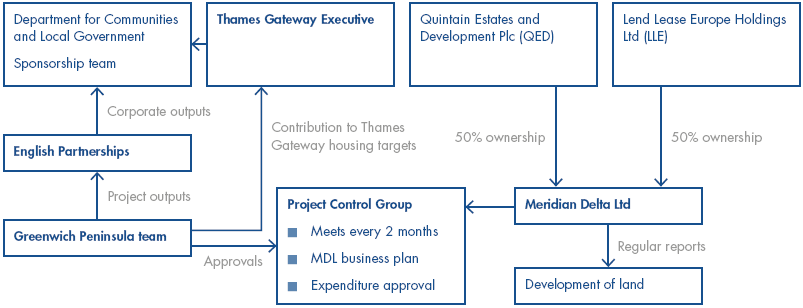
1.9 Figure 5 outlines the governance and accountability relationships involving the project's participants. A monthly Project Control Group is the main forum for EP and MDL to discuss the project's progress, generally with reference to a rolling, three-year business plan. Our review of the minutes of these meetings suggests that the issues discussed are largely operational rather than strategic. Moreover, progress is not monitored by the Group against the initial plans for development and financial returns from 2002 and 2004 respectively (see Parts 2 and 3). While there is some strategic oversight of the project through the Group, there is potential for EP's Board to be more involved in this process and in challenging the project team given that the Peninsula is a high profile, flagship development. It is important that there are strong accountability arrangements in place for this specific project.
1.10 The Department has two teams with an interest in progress; the EP sponsorship team and the Thames Gateway Executive. The sponsorship team looks at the project as one of many developments and focuses on holding EP to account at a high level for delivery of its corporate objectives. Since early 2007 the Department's sponsorship team has also held twice yearly review meetings with EP specifically on the project. The Department has accepted that its accountability arrangements need to be strengthened further, and has told us it is taking steps to accomplish this. In particular the Department accepts that it needs to challenge EP more on delivery issues, such as achievement against baselines and current plans for development. The Department intends that any new arrangements stay in place after the establishment of the new Homes and Communities Agency (HCA), which from 2009, will take over direct responsibility for delivering the project from EP. As the project is located within the Thames Gateway, the Thames Gateway Executive also has a specific interest in its progress and is kept advised of developments.
5 | The chain of accountability for the deal |
| |
Source: National Audit Office analysis | |
1.11 Beyond the direct chain of accountability, other parties outside the deal have a level of influence over the project and statutory regulatory roles to perform. These include, for example, Greenwich Borough Council, the Housing Corporation, the Health and Safety Executive and the Environment Agency. Others have various degrees of involvement in the planning process; for example the London Mayor and the Greater London Authority, which set policy for London and Transport for London, which runs the services on which the planned population of the Peninsula will depend. Engagement with the project and cooperation from these organisations is important to the success of the development. But there is no forum or process for bringing together the interests of all these stakeholders.