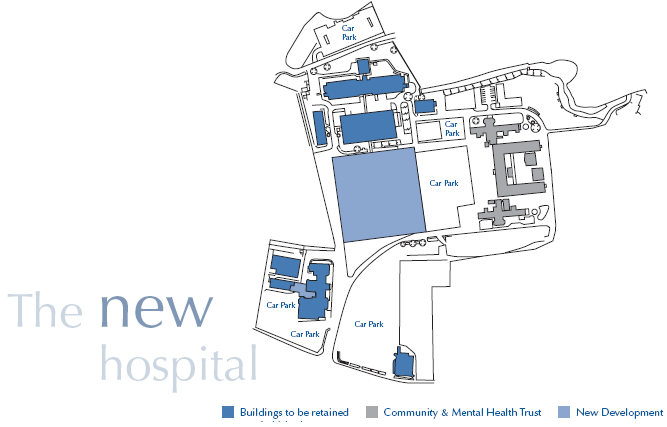
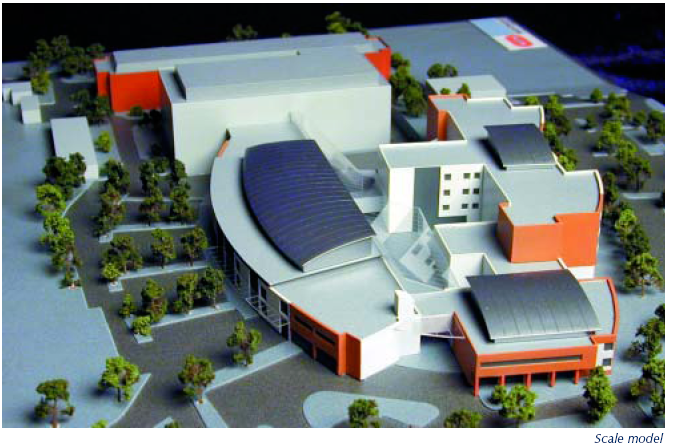
West Middlesex Before & After the Redevelopment
(Source: Department statistics 2000/1)
|
■ Serves population of 310,000 |
|
■ 58,000 A& E attendances |
|
■ 1200 staff |
|
■ 103,000 x-rays and other diagnostic images |
|
■ 424 beds |
|
■ 28,000 finished episodes of care |
|
■ 6 operating theatres |
|
■ 3500 ward attendances |
|
■ 2 day case theatres |
|
■ Awarded 2 stars in NHS performance rating (2000/1) |
|
■ 155,000 outpatient attendances |
|
|
|
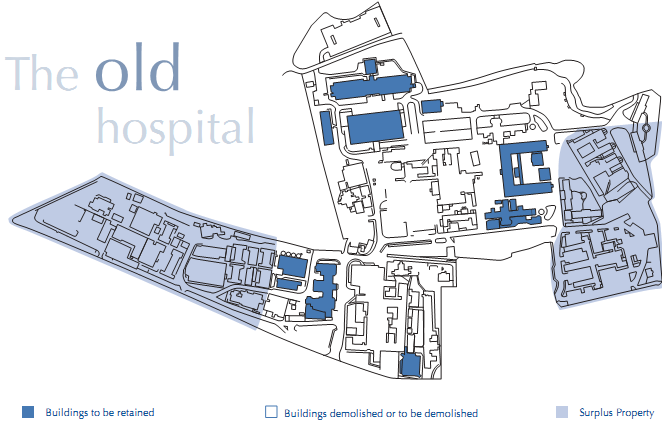
The old site is large and unwieldy. The lay-out of interdependent services such as Accident and Emergency (A&E), theatres, and rehabilitation units. Patients can spend up to 15 minutes in an electric ambulance being moved around the site. Some essential services, such as X-Ray, are provided several times at different locations, leading to inefficient staffing and additional costs. Much of the dilapidated building stock on the site is over 100 years old and in recent inspections the site as a whole has failed to meet its statutory fire and health and safety obligations. |
|
|
In the new, 434 bed redevelopment there will be no need for electric ambulances to ferry patients around, for duplicate diagnostic suites (X-ray, and Ultrasound) or pharmacies. A new central access point will be created with improved facilities for the disabled and, by focusing on the logical relationships between services, the flow of care will be enhanced. The buildings that are retained from the old site will be refurbished. |