The original deal combined construction of the Link with the privatisation of Eurostar UK
1.2 The deal with LCR was more than just a very large privately financed infrastructure project, it also involved the privatisation of two Government-owned companies (Figure 2):
■ Union Railways Limited (URL), responsible for the planning and design of the Link; and
■ European Passenger Services Limited (now Eurostar (UK) Limited or Eurostar UK), the operator of the UK part of the Eurostar international train service. Assets transferred to the private sector on privatisation included the international rail terminal at Waterloo in London and eleven Eurostar train sets. Another seven train sets had previously been sold and leased back by the company.
The deal also included the transfer to LCR of various land and buildings at King's Cross, Stratford and elsewhere in London and Kent. Further information on the Link is at Appendix 3.
2 |
| The original contractual structure of the deal |
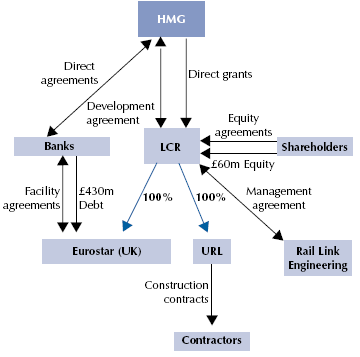
Note: Rail Link Engineering (RLE), is an unincorporated association comprising Bechtel Limited, Ove Arup & Partners, Sir William Halcrow & Partners Limited and Systra Sofuetu Sofrerail. RLE has been contracted to design and project manage Section 1 of the Link.
Source: LCR
1.3 The Department privatised European Passenger Services Limited for policy and commercial reasons. On policy grounds, the privatisation was compatible with the Government's plans to privatise British Rail. The commercial reasons for the privatisation stemmed from the view that Eurostar UK would generate substantial revenues over time. The Department considered that the business was such an attractive proposition that, if transferred free of long-term debt, there would be a lower requirement for public support of the project.