H.3 Contract management, the contract and the procurement process
The contract negotiation process must be conducted with the understanding that the contract will form part of a broader risk management framework for the project. It is vital to build a contract that identifies clearly the obligations of the private party and government, and enables a productive relationship built on long-term perspectives and commitments.
The development of such relationships in the contract is an essential component of effective contract management. The contract should not be so rigid that it precludes flexible, constructive management or the natural maturing of the relationship between government and the private party.
As risk is a dynamic concept, contract management must evolve with the delivery of the contracted services throughout the project lifecycle. While contract management evolves, the contract itself should not evolve inadvertently. Through effective contract management, the government party should ensure that the contract is modified only by written agreement of the parties. For risk to be managed effectively the foundations for contract management must be incorporated into the RFP and the draft contract provided to bidders, and maintained through the further development and finalisation of the contract. Doing so ensures that:
• a sound contractual basis for effective contract management is incorporated in the contract;
• there is adequate knowledge transfer from the procurement team to the contract management team; and
• the contract management strategy for the project is in place as soon as practical after the contract is executed.
To help this process, it is essential to include the proposed contract director in the procurement team at an early stage, or at least allow that person to observe the procurement process and have access to procurement team members to enable an informed preparation of the contract management strategy. The procurement team should provide practical help in understanding the project and the risks inherent in it. The Project Director has overall responsibility to ensure that the contract director works with the procurement team to develop an effective contract management strategy.
Figure H‑2: The relationship between contract management and the procurement process
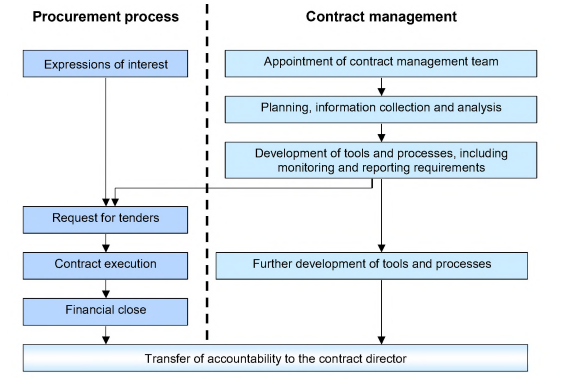
| Effective contract management must be initiated early in the procurement stage of the project and requires a strong understanding of the contract itself. The Project Director succeeds by achieving a contractual arrangement that will deliver the project objectives. As the identification and management of risks is necessary to achieve the project objectives, the Project Director must support risk identification and management, and the development of an effective contract management strategy. The contract director succeeds by ensuring that the project objectives are delivered. |