Part 1: Why did the Agency choose a partnership for delivery of IT services?
4 IT is important to the Agency's business, impacting on practically every aspect of their work. For example, the Agency use large, sophisticated databases and bespoke applications developed in many cases by the Agency's radio engineers to model the impact of the allocation of frequencies on users. IT is also a key element in the Agency's research and development aimed at extending the usable radio spectrum. When first considering different ways of obtaining IT services in 1994, the Agency were unable to meet their requirement for IT services from in-house resources and were heavily reliant on the use of expensive individual contractors. The Agency were keen to achieve financial savings by bringing this reliance to an end.
A |
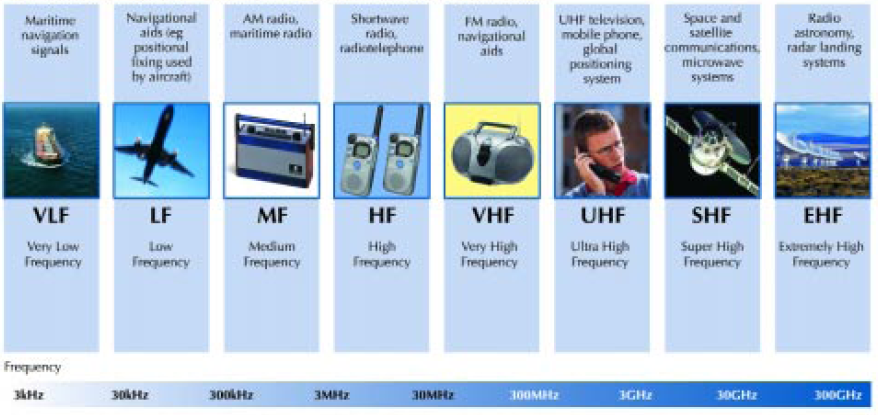
| The radio spectrum |
|
| This figure shows the range of frequencies which make up the radio spectrum and the main user groups for specific points of the spectrum. The Agency manage the spectrum to achieve the most effective use of it and in accordance with domestic and international regulations. They license use by companies and individuals and monitor activity to prevent unauthorised use and interference to transmission. |
|
|
|
|
| Note: kHZ = kilohertz, or 10000 Hz; MHz = megahertz, or 1000 kHZ; GHz = gigahertz, or 1000 MHz |
|
| Source: National Audit Office |
5 The Agency reviewed a number of options including outsourcing, which would have involved the transfer of IT staff and responsibility for delivering services to a private sector company. Concerned about transferring business-critical IT systems to a contractor, the Agency sought a solution that would give them more influence over the delivery and development of IT services than they considered could be achieved by outsourcing. The Agency regarded this influence as particularly important because they considered that their engineers needed to retain the flexibility to modify systems in response to new developments in technology and that this would not be easily accommodated in an outsourcing contract. The Agency also wanted to retain some in-house expertise in the delivery of IT services so that they could, if necessary, resume the provision of IT services in-house at some future date. In addition, they considered it important to retain sufficient in-house expertise to interact effectively with the private sector company. The Agency decided that they could best achieve these objectives through a long-term partnership with a private sector company. The partnership, moreover, would give the Agency access to a wider range of skills and resources than they had in-house, be available when needed and at a lower cost than their existing arrangements.
6 The Agency had, over a number of years, been receiving a large number of requests for assistance in spectrum management issues from overseas radio spectrum administrations. They considered that there was scope to exploit commercially their expertise in spectrum management through the provision of consultancy services and the sale of their spectrum management IT systems. They decided to link the delivery of IT services and commercial exploitation as one project. The Agency reasoned that the partner would acquire, through the delivery of IT services, a good understanding of the work of the Agency and their IT systems, and so would be in a strong position to sell these systems and the Agency's expertise in radio spectrum management. The commercial potential of these systems would also give the partner a clear incentive to concentrate on the efficient and effective delivery of the Agency's IT services.
7 After investigation of the options the Agency decided the partnership should take the form of a joint venture company and that this would provide them with the influence they sought over the provision of IT services. The idea of establishing such a company was an innovative approach to securing IT services in the public sector at the time. The Agency recognised that this approach would carry some risk as there was no existing model or guidance.
8 The Government is encouraging departments and agencies to exploit their skills and assets commercially through the Wider Markets Initiative which is aimed at improving the management of public sector assets. This partnership is an early example of an agency trying to exploit their intellectual skills base and property commercially with the assistance of a private sector partner.