Technology supporting the existing telecommunications systems was nearing the end of its life
1.3 In its new role, the Agency considered that it needed enhanced telecommunications systems to obtain live data about road and traffic conditions and to transmit this information to road users and other parties, such as the police and broadcasters. The Agency also wanted to deploy the next generation of traffic management systems that it had trialled on the section of the M25 between the A3 and the M40.
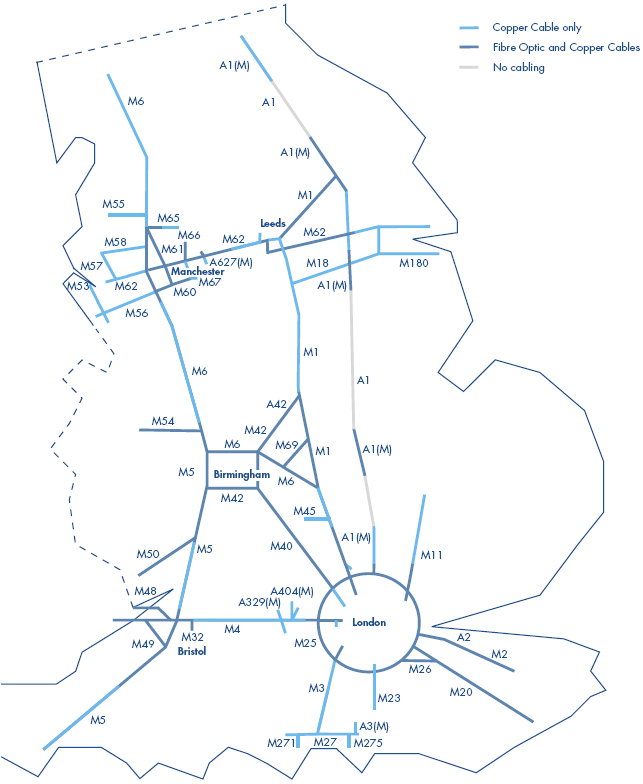
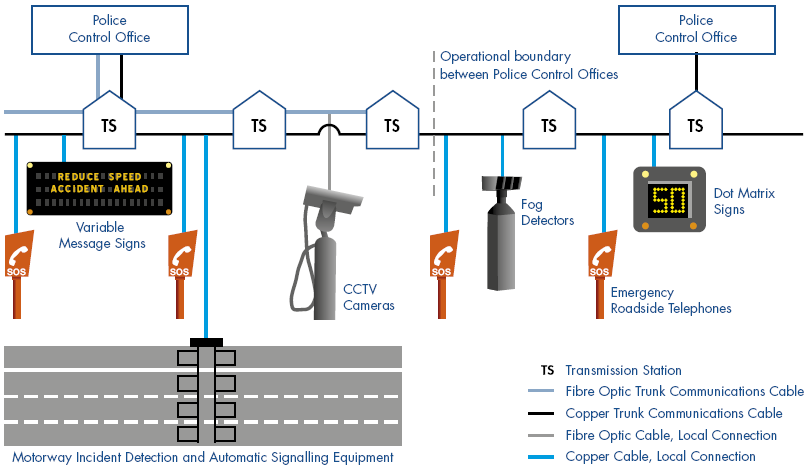
1.4 Almost all of the Agency's existing telecommunications systems were located alongside motorways (Figure 4 on page 12). These systems were the result of nearly 40 years of piecemeal development in 32 local areas that connected approximately 14,000 roadside devices, such as emergency roadside telephones and closed circuit television cameras, to their local police control offices (Figure 5 on page 13). Nationally, the transmission cabling consisted of a mix of fibre optic and copper cables and transmission equipment was housed in approximately 150 mostly small brick buildings, located every 20 kilometres along the motorway network. Between these transmission stations, cable jointing boxes, at every 500 metres, connected local roadside devices to the trunk telecommunications cables.
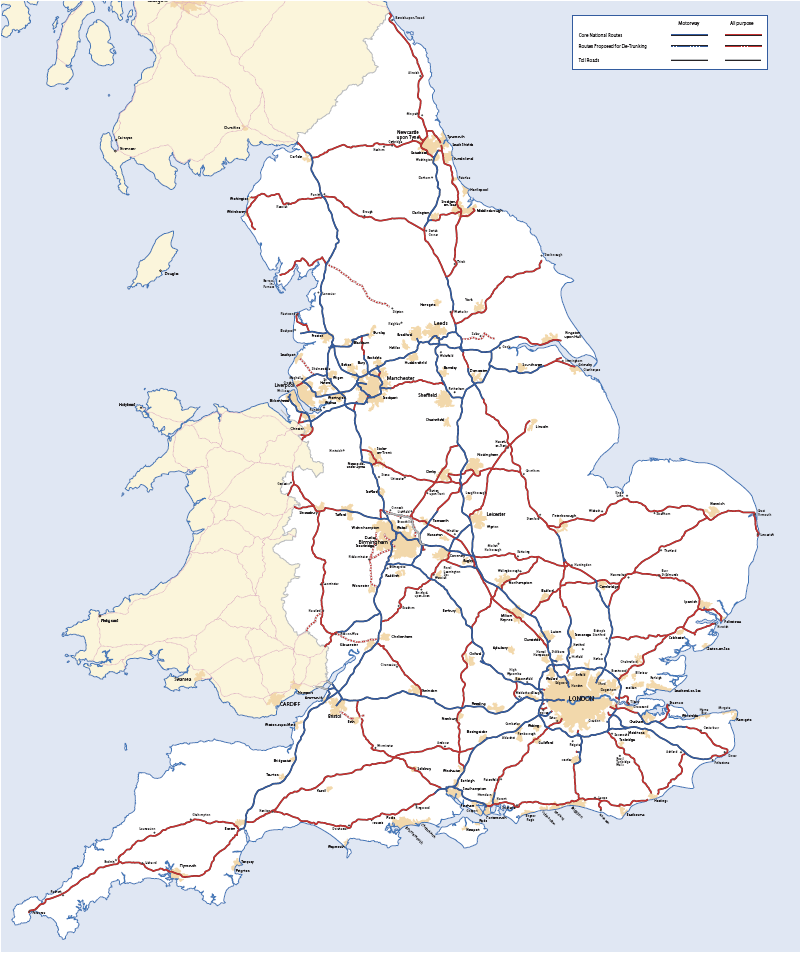
3 | The Agency's network of motorways and all purpose trunk roads |
Source: Highways Agency | |
NOTE This map is based upon Ordnance Survey material with the permission of Ordnance Survey on behalf of the Controller of Her majesty's Stationery Office. © Crown copyright. unauthorised reproduction infringes Crown copyright and may lead to prosecution or civil proceedings. | |
4 | In 1999, the Agency's existing motorway telecommunications network covered 2,900 kilometres of motorways and included 1,650 kilometres of fibre optic cabling |
Source: Highways Agency | |
5 | The Agency's motorway telecommunications network in 1998 connected roadside devices to police control offices |
Source: National Audit Office | |
1.5 The quality and capability of the transmission assets and technology varied from area to area. Along the motorway network, the telecommunications systems used copper cable to carry voice and data signals, but transmission capacity was limited. By 1998, the Agency had installed fibre optic cable along half of the motorway network, principally to carry CCTV camera images. While some local areas had upgraded parts of their systems to digital technology, most areas used obsolete analogue technology to transmit voice, data and CCTV signals to and from their local police control offices. A national telecommunications system, which supported telecommunications between police control offices, was also based on obsolete analogue technology. This technology was no longer supported by the telecommunications industry and sources of spares and skilled support were not widely available. If left unaddressed, the continued use of analogue technology would have left the Agency with insufficient transmission capacity to meet its expected future telecommunications needs as the operator of the English network of motorways.