The structure of the LCR's debt financing is appropriate
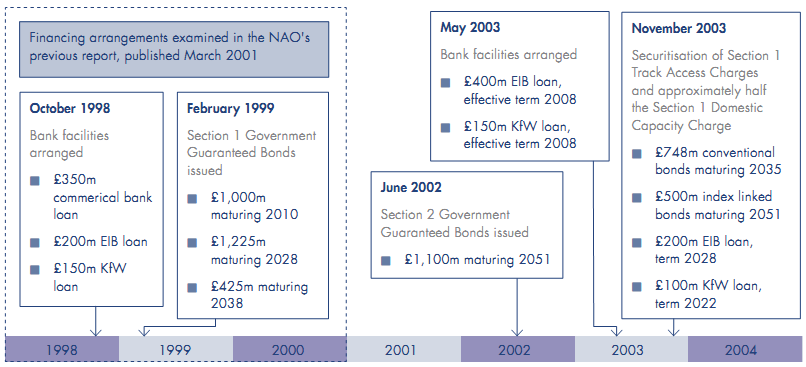
6 By the end of 2003, LCR had secured all the finance that it considered it would require to complete construction of the Link, operate and maintain Section 1 and fund Eurostar UK losses in the medium term. The financing in place, as shown in Figure 22, currently comprises £900 million of medium-term bank facilities and just under £5,300 million of longer dated debt maturing in 2010, 2022, 2028, 2035, 2038 and 2051.
7 The track access charges paid by Eurostar UK and domestic train operators are predictable, long-term and back ended. Given these long term cashflows, raising long-term debt on the back of them is likely to be the most efficient form of funding. Furthermore, future financing pressures on LCR are eased by the spread of maturities for the GGBs and amortising the principal for the bonds secured against Eurostar UK's payment of track access charges.
8 In principle, LCR could have raised all of the 2002/03 financing through bond issues. However, long-term debt is innately inflexible and therefore short-term fluxes in any business may be better funded by alternative facilities. LCR recognised that to avoid a funding shortfall some short-term facilities to cover the peak of Section 2 construction expenditure in 2003/04 were required until it received the first instalments of the Deferred Grant in 2005/06. The European Investment Bank (EIB) (£400m) and KfW (£150m) debt arranged in May 2003 introduces an element of revolving (in the case of the KfW debt), flexible, short term debt, which is an important part of the overall funding structure. Furthermore, the £200 million EIB debt raised through the 2003 securitisation was cheaper than bonds at that time. The banks and borrower have a bi-lateral relationship, making bank terms easier to negotiate than bond finance.
| 22 | Between 1998 and the end of 2003, LCR had raised nearly £6,250 million of debt in the capital markets to fund: construction of the Link; operation and maintenance of Section 1; and Eurostar UK's concurrent losses |
|
| |
| Source: National Audit Office | |
| NOTES 1 EIB is the European Investment Bank. KfW is Kreditanstalt für Wiederaufbau, a German development bank. 2 The last repayment instalment of the £350 million October 1998 commercial facility is due in the quarter ending December 2005. 3 LCR has repaid £50 million of the October 1998 KfW loan facility. The remaining £100 million of the October 1998 KfW loan facility and the £200 million, October 1998 EIB loan facility were rolled over in 2003 and secured against Eurostar UK's payment of the Section 1 Track Access Charges and the Department's payment of the Section 1 Domestic Capacity Charge. | |
9 Refinancing Section 1 through the bank debt market may not have been possible and, even if it were, would not have been optimal. Lower pricing and longer maturities were achieved for the bond financing relative to what might have been available in the loan market. Although the draw-down profiles and repayment terms would be much more flexible in the bank market, the length of term (out to 50 years) required by the project is not currently available in the loan market in material volume.