7.3.6.1 Full price and partial price TOC development reimbursement
Some aspects of the process of TOC development are similar to that of tendering a traditional D&C project. The cost of tendering can vary widely but industry norms for a contractor's investment in a large D&C tender would typically be 1% of the tender price (this is dominated by design costs) and often absorbed in corporate overhead as a cost of doing business or added as a discrete item to the Proponent's tender.
In the alliancing tender process, NOPs are paid to compensate them for the increased intellectual effort and senior management input demanded by TOC development. The Guide recommends, where jurisdictional policies allow, that a portion of TOC development costs be reimbursed as a fixed or capped amount and suggests, as a starting point, a fair proportion is 50% of the Owner's estimate of the Proponent's likely costs to complete a Project Proposal.
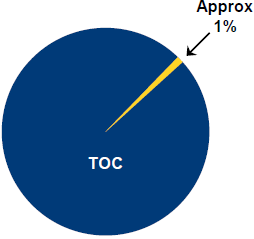
| Figure 21: Relative Cost of reimburgsing NOPs The proportion of costs compensated should be balanced between the additional effort required by Proponents and the attractiveness of the project to them. It would be expected the total compensation costs for multiple Proponents be similar to that of a traditional D&C tender. Figure 21 shows the typical proportion of development costs and highlights their relative insignificance with respect to the TOC and forecast total project costs. Limiting compensation, when applied to any selection, motivates Proponents to provide tight and efficient processes for TOC development, meeting milestones, deadlines and the delivery of outcomes, including the Project Proposal. |
|
Where competitive processes are provided (full price and partial price) this incentive is heightened due to the same tensions where the competing Proponents will be keen to meet deadlines and milestone dates as they compete to demonstrate their superior skills to the Owner.