2.1 Introduction
Traditionally, many public sector agencies have reported on the performance of an alliance through a Value-for-Money (VfM) Report which is prepared at project completion. Whilst VfM Reports are encouraged, the approach to preparing VfM Reports has been wide ranging. As such, the usefulness of VfM Reports to properly inform the government on the alliance's performance can be improved.
It is not difficult to provide a definition of VfM, however, it is more challenging to fully articulate how the VfM concept is applied to plan and practically assess VfM outcomes for an alliance project. Moreover, the understanding and application of the VfM concept appears to vary greatly across public agencies and alliance projects.
This Guidance Note has been prepared to:
a) Align the understanding and use of the VfM concept in alliancing with general government processes and practices.
b) Provide a framework for appreciating, reporting and measuring VfM that is shared by the government, the Owner and the alliance.
c) Identify how/where alliancing arrangements can be improved to further demonstrate their value to the government.
d) Provide an Owner's VfM Statement template to ensure the alliance deliverables are aligned to the approved Business Case.
e) Provide a VfM Report template to promote reporting on alliances in a manner that is comparable between projects and meets a consistent standard that is acceptable to the government.
It should be noted that this Guidance Note requires VfM Reports to be prepared on the basis of the government's view of VfM. It proposes that the VfM Report be provided from the Owner to the government to demonstrate the performance of the alliance in achieving the approved objectives detailed in the Business Case2.
Figure 1 illustrates the planning steps in relation to VfM outcomes in an alliance, referencing the Business Case, the Owner's VfM Statement and finally a VfM Report submitted by the Owner to the government.
Table 1 illustrates the roles played in the VfM planning and development of an alliance.
Figure 1: Hierarchy of steps for planning and reporting VfM outcomes in an alliance
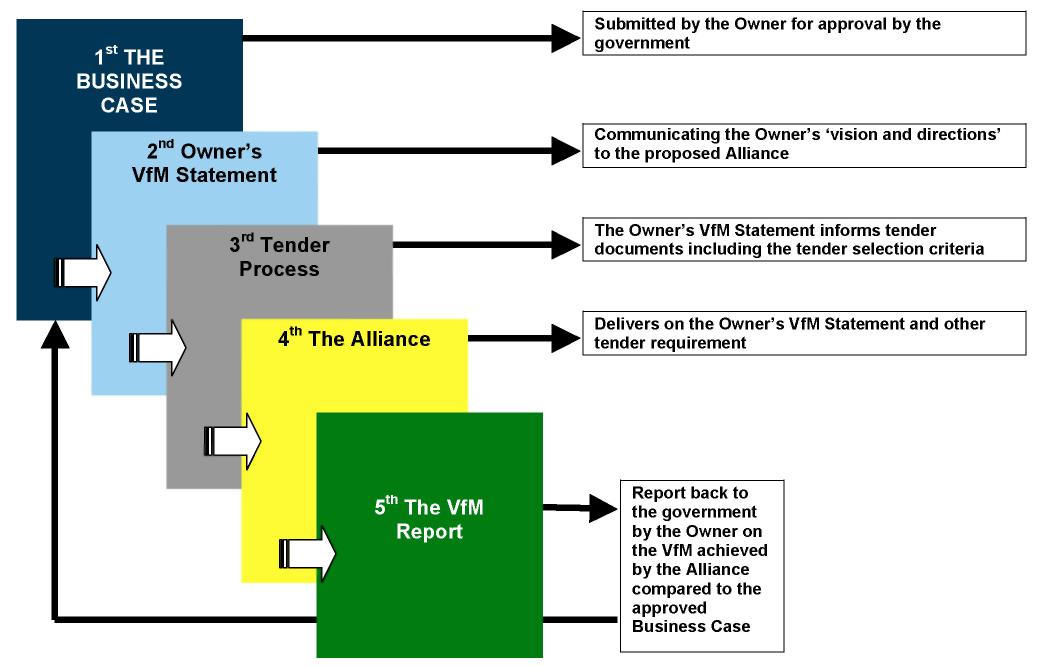
Table 1: Illustrates the roles of the parties in planning for, and reporting, VfM outcomes
| Selected planning and delivery steps | |||||
| Role in project lifecycle | 1. Business Case | 2. Owner's VfM Statement | 3. Tender Processes & PAA | 4. The Alliance (Project Delivery) | 5. VfM Report (Project implementation review) |
| Government | Determines investment priorities and approves funding for selected business cases. | Provides funding (and/or underwrites risks). | Provides funding (and/or underwrites risks). May have approval role for specified tender milestones. | Provides funding (and/or underwrites risks). Receives progress reports from Owner (against approved Business Case). | Receives formal VfM Report from Owner which assesses VfM outcomes against approved Business Case. |
| Agency/ Owner | Identifies community need and possible solutions for funding by govt. Prepares Business Case for approval by govt. | Finalises the Owner's VfM Statement (which is aligned with the Business Case approvals), clearly articulates project parameters, objectives and budget. | Attaches and incorporates the VfM Statement into Tender documents.3 Finalises the Tender Selection Criteria for NOP evaluation and selection. | Maintains active informed commercial role as part of the alliance. Provides suitable Participants to be part of the alliance. | Prepares a post implementation review of the alliance project (ie the VfM Report for the govt). |
| Alliance (Proponents and then Participants) | No role. | No role. | Develops TOC, aligns and agrees to PAA to deliver on Owner's VfM Statement and other tender requirements. | Provides regular project progress reports to Owner. | Project documentation available to support post implementation review process. |
______________________________________________________________________________
2 Recommendation 7.1 in the Productivity Commission 2014, Public Infrastructure, Inquiry Report No. 71, Canberra, is noteworthy. In the context of all contracting models, it recommends "…. monitoring of project performance and ex post independent evaluation and publication of project outcomes (including periodic reporting of benchmark costs by Infrastructure Australia) (page 40)". This is consistent with the position taken in this Guidance Note that VFM Reports need to be prepared independent of the Alliance.
3 Some of the Business Case content lends itself being incorporated in the PAA and Owner's VfM Statement (e.g. the functionality of the infrastructure asset to be constructed); however, most of the content may not be associated with the work of the alliance (e.g. the expected social and economic benefits arising from the new community services being enabled by the infrastructure). The Owner's VfM Statement is designed to be directly relevant to, and applied by, the alliance. It informs the drafting of the PAA and the full Owner's VfM Statement should be incorporated as part of the PAA.