6.3 Ensuring the alliance structure optimises VfM outcomes
This Guidance Note presumes that the Business Case had included a thorough analysis of procurement methods and clearly demonstrated that an alliance is the optimum delivery method.
Further details on the structure, terms and conditions upon which the market will be approached also need to be documented by the Owner prior to the tender process. The Owner should have a contract structure that optimises VfM outcomes.
The two major decision points in establishing the alliance are illustrated below:
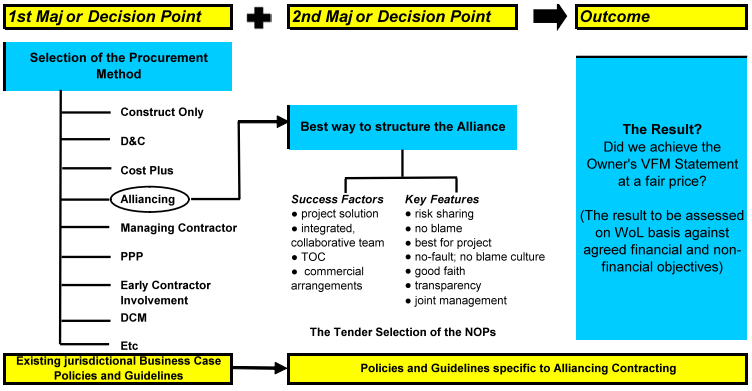
In Infrastructure procurement: delivering long term value (March 2008, the UK's HM Treasury wrote (page 48):
'Performance in the successful delivery of outcomes is strongly dependent on the skills of the client, not simply on the contract structure. The skills required include those which are needed to create an effective engagement with the market, to structure the right deal and an underpinning contract to support and to drive continuous value from the arrangements throughout its life'.20
Therefore, the capability of the Owner to recognise the true incremental value the alliance should deliver compared to the alternatives, is a key driver of VfM and effective procurement.
At the completion of the alliance, the VfM Report should not only comment on the effectiveness of the alliance structure in relation to the performance of the alliance delivering the project in accordance with the terms and conditions of the PAA; it needs to also includes an assessment of whether these agreed legal and commercial terms and conditions provided for a best-in-market actual outcome.
______________________________________________________________________________
20 Infrastructure procurement: delivering long term value' March 2008 HM Treasury UK Government, (page 48).