2. THE ROUTE WE ARE ON: THE WIDENING INVESTMENT GAP
Congress established the Highway Trust Fund (HTF) in 1956 so that federal taxes on motor fuels and vehicles would be used to help build and maintain a surface transportation system that ultimately would become one of the most developed national networks in the world.
Although the portfolio of federal taxes and associated rates worked well to accomplish the mission of constructing the Interstate System, resulting revenues over the last few decades have fallen woefully behind the system's burgeoning investment needs. Inflation has significantly eroded the buying power of motor fuel taxes, which have not been increased since 1993, and fuel efficiency improvements mean people pay less in fuel taxes per mile of roadway travel.
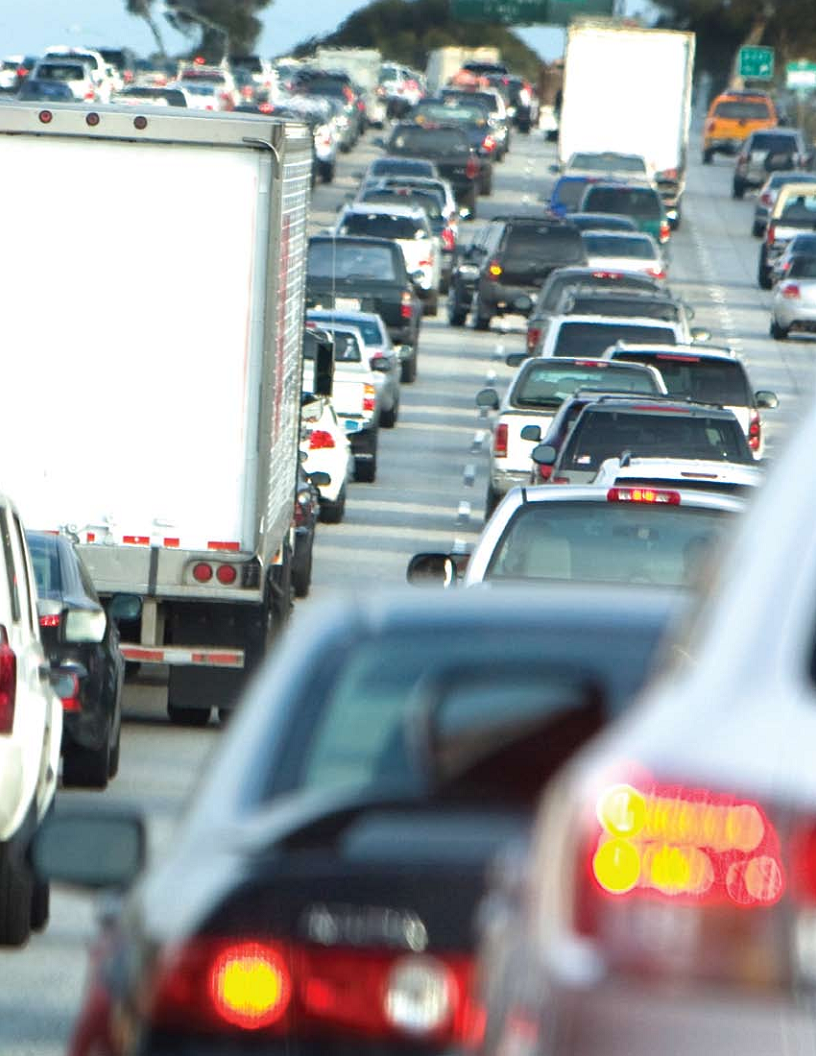
A growing economy and an increasing population, together with constraints on rail capacity, have significantly increased both the amount of freight carried on the highway system and the number of people using the system. In addition, advances in technology have not been effectively employed to better manage the existing system capacity. As a result, our national surface transportation system is no longer performing well in certain key respects and is suffering from spending levels for maintenance and capacity improvement that are insufficient to meet the demands of travelers, accommodate the movement of goods, improve access in rural areas, or even provide the desired level of safety. Individually and collectively, we face serious consequences if we continue on the present path of failing to enhance or even maintain an aging system: too many lives lost from unsafe conditions, an eroded quality of life for system users, and diminished economic performance as a nation.