Tax Incentives, including Private Activity Bonds and Tax Credit Bonds
Tax incentives have played only a minor role in surface transportation investment to date, most recently through the 2005 SAFETEA-LU highway/ intermodal PABs authorization described earlier. According to a paper prepared for the National Surface Transportation Policy and Revenue Study Commission, transportation spending consumes about 3 percent of the federal budget, but tax expenditures (representing the fiscal cost of tax incentives) for transportation purposes amount to only about 0.4 percent of the total estimated tax expenditures in coming years.5
Many tax incentives proposed in recent years have targeted certain projects types (e.g., freight and passenger rail) that do not benefit from existing grant or other assistance programs and for which there is a potential argument for some form of federal subsidy, distinct from that which existing credit programs can provide. These financial incentives are frequently used to subsidize desired activities and investments by state and local governments as well as the private sector that benefit the public.
BOX 7-6: PRIVATE ACTIVITY BONDS | |
SAFETEA-LU authorized U.S. DOT to allocate up to $15 billion in Private Activity Bonds among qualified highway and surface freight transfer facilities. As of December 2008, U.S. DOT had approved allocations totaling nearly $5 billion for eight projects, and one project-the Capital Beltway HOT Lanes Project-had gone to market | |
•The Capital Beltway/l-495 is a 64-mile limited access highway around the Washington, DC, metropolitan area with substantial daily commuter and business traffic between Virginia and Maryland. • The project aims to improve conditions in one of the most congested U.S. regions through the construction of two additional high occupancy/toll (HOT) lanes in each direction (four lanes total) along 14 miles of the beltway's shoulder between the Springfield Interchange and just north of the Dulles Toll Road in Fairfax County. |
|
• In addition to PABs, the project is using a combination of federal credit (TIFIA), state funding from Virginia, and private equity. The financing is supported by revenues from dynamic tolling. Use of the HOT lanes will be free to buses, three- person-plus carpools, and emergency vehicles. | |
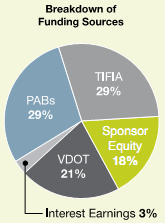
Sources: U.S. DOT, Goldman Sachs.