Call for evidence on the reform of PFI
1.38 While the Government had already introduced a number of reforms to PFI it considered that a fundamental reassessment of the model was still required. The Government's aim was to develop a new approach to draw on industry skill, innovation and expertise, in a way that offers better value for the Government's investment in public infrastructure and services. The Government set out its objectives to develop a new approach to the delivery of public infrastructure that:
• is less expensive and uses private sector innovation to deliver services more cost effectively;
• can access a wider range of financing sources, including encouraging a stronger role to be played by institutional investment;
• strikes a better balance between risk and reward to the private sector;
• has greater flexibility to accommodate changing public service needs over time;
• maintains the incentive on the private sector to deliver capital projects to time and to budget and to take performance risk on the delivery of services;
• delivers an accelerated and cheaper procurement process; and
• gives greater financial transparency at all levels of the project so that the public sector is confident that it is getting what it paid for and that the taxpayer is sure it is getting a fair deal now and over the longer term.
1.39 To meet these objectives and to give an opportunity for all interested parties to bring forward proposals on how best to reform the PFI model, the Government launched a call for evidence in December 2011. All parties with an interest in the delivery and financing of future assets were invited to share their views on the reforms that should be implemented for future projects.
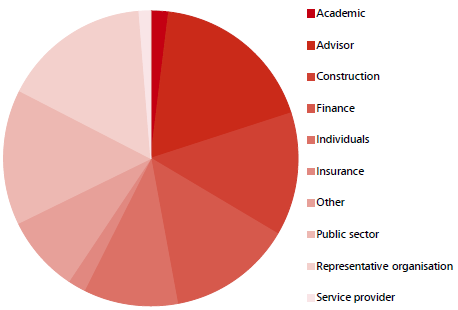
1.40 In response to the call for evidence, 136 submissions were received from a range of organisations, including advisors, investors, contractors, service providers, academics and the public sector. 3 responses were received from MPs. In addition, 16 responses were received from individuals. The responses to the call for evidence have been published alongside this document and a summary of the responses received is provided in Annex A. Annex B contains a full list of organisations that responded.
Chart 1.E: The mix of respondents to the call for evidence on the reform of PFI
Source: HM Treasury |
1.41 As part of the call for evidence process, a range of views were expressed on how best to reform the PFI model. There were, however, relatively consistent views on the issues that need to be addressed in the new model. It was considered that there is a need for:
• better value for money of the financing of projects;
• the model to be able to access wider sources of equity finance to increase competition and drive down equity returns;
• alternative approaches to debt finance to address capacity constraints in the market;
• greater transparency of the liabilities created by PFI projects and over returns made by investors;
• an increase in speed and reduction in costs of the procurement process;
• greater flexibility in the provision of services due to the long-term nature of the contracts;
• greater transparency over the build up and management of the lifecycle fund; and
• better allocation of risk between the public and private sector, to ensure that risks are placed with the party best able to manage them.