Social
The year The Social infrastructure sector has made substantial progress over the past few years; however, it was starting from the lowest base and there is still significant improvements that can be made. The improvement programme is wide ranging, covering asset management, performance measures, capital planning, and new tools to help guide funding allocation decisions. There has also been the continued rollout and development of the Better Business Case process and a focus on providing system wide assurance. Procurement has been another area of focus. Public Private Partnerships have been introduced with the two pathfinder projects in education and corrections progressing well and further PPPs being scoped. New Government Procurement Rules have been published and come into effect in October. Asset management has traditionally been underdeveloped and there is a growing awareness of the importance of asset management maturity as a lead indicator of future performance. We reported last year on the GHD study that provides a baseline of performance. The Office of the Auditor-General released two recent reports on Insurance of Public Sector assets and managing public assets. Agencies were tasked with (a) critically examining how they go about assessing the appropriate level of insurance cover, and (b) understanding and managing risks associated with deferred maintenance. There is potential for increased private sector involvement in asset management and development to drive improvements in efficiency and service performance. We have already seen this with the two pathfinder PPPs. The most capital intensive agencies have been building capability on forward planning of capital and operating intentions. Their progress will be reported later this year in the first 10-year Capital Intentions Plan for Government. The Future Investment Fund (FIF) was established to invest the money released by selling minority shareholdings in electricity companies and reducing the Government's stake in Air New Zealand. In Budget 2013, the Government is allocating $1.52 billion of new capital from the Fund on top of the $569 million allocated in Budget 2012. Schools, health, science and innovation, transport, and the Canterbury rebuild all benefit from the FIF. Whereas capital has traditionally been allocated on a year by year basis, new tools have been developed to guide investment decision-making with a greater focus on delivery of expected benefits. Lessons learned from Novopay have wider implications for infrastructure governance and delivery. |
Overview The Social infrastructure sector has come a long way, especially in areas of asset management, capital planning, procurement and the allocation of capital. There are further opportunities for the pace and scale of improvement to be stepped up, including more fundamental questions of how best to utilise the whole balance sheet and consider questions of ownership. |
Highlights from the past year » External review (July 2013) revealed widespread user endorsement of and support for BBC method and guidance. » New generic guidance on total costs of ownership is under development. » New Government Procurement Rules published and come into force in October. » Significant improvement in 4 year budgeting and linking of capital to Government objectives. » New tools developing to support decision making around allocation of new investment. » Exploration of further PPP projects in both education and corrections. » Contracts signed for the acquisition of new Defence assets including 200 Army trucks and 10 new Seasprite helicopters. » Progress across the Justice sector on disposing of surplus property, decommissioning end-of-life assets and reducing the number of courts. | Opportunities/challenges » At a whole of system level, growing our understanding of how well the assets we own are performing and where improvements can be made. » Developing a more sophisticated understanding on overall investment approach and why we own the assets we own and the risks involved. » Greater use of private sector expertise in the development and management of new assets. » Bridging systemic capability gaps (ranging from understanding of long-term costs of ownership, to investment analysis to project governance, portfolio management, benefits realisation, asset performance reporting etc). » Variability across agencies on maturity of capital asset management - including performance, planning and asset utilisation. » Moving beyond individual agencies to a sector approach to planning and prioritising capital investment, including sharing asset management expertise across the sector. » Taking sector collaboration on capital planning to a new level e.g. so resources are prioritised to investments that deliver the best return for the sector rather than an individual agency. |
Housing NZ Insulation Programme
| Housing New Zealand
| |
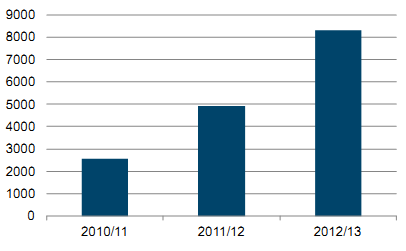
2012/13 » $190m improving quality of state houses » 2,000 whole of house upgrades completed » 8,295 homes insulated | by 2015/16 » 2,000 new homes » 3,000 new bedrooms to 2,000 state houses » Complete repairs to 5,000 earthquake damaged homes | |