Preface
|
| The Philippine Development Plan 2011-2016 was formulated in accordance with the Constitutional provision of Section 9, Article VII, directing the Government's economic and planning agency to "implement a continuing integrated and coordinated programs and policies for national development." Upon the assumption of President Benigno S. Aquino III of the country's leadership, he embarked on his program of government that is based on his "Social Contract with the Filipino People" wherein he articulated a commitment to transformational leadership, institutional reform, economic stability and inclusive growth. On September 2, 2010, the President issued Memorandum Circular No. 3 directing the National Economic and Development Authority (NEDA) to coordinate the formulation of the Philippine Development Plan for 2011-2016. In the formulation of the Plan, NEDA coordinated with all the country's development stakeholders in giving substance and directions to the document, based on the program of government of the Aquino administration. Exhaustive consultations were conducted throughout the country with the participation of various government agencies, the regional development councils, local government units, the business sector, nongovernment organizations, academe, and groups of well-known experts in economic and social development. The Social Contract envisions "a country with an organized and shared rapid expansion of our economy through a government dedicated in honing and mobilizing our people's skills and energies as well as the responsible harnessing of our natural resources." With good governance and anti-corruption as an overarching theme, the Philippine Development Plan will effectively address poverty and create massive employment opportunities and achieve its vision of inclusive growth. It has emerged into a comprehensive set of strategies, policies and programs and activities within a framework of inclusive growth that will translate the administration's development agenda for the next six years. The Plan centers on five key strategies. First is to boost competitiveness in the productive sectors to generate massive employment. Second is to improve access to financing to address the evolving needs of a diverse public. Third is to invest massively in infrastructure. Fourth is to promote transparent and responsive governance, which is emphasized in all the chapters. And fifth, is to develop human resources through improved social services and protection. These strategies will be supported by complementary action programs that focuses on achieving a stable macroeconomic environment, ensuring ecological integrity, and advancing the peace process and guaranteeing national security. To achieve growth that is inclusive and sustained, we want to ensure that the production sectors are able to provide the needed employment and livelihood opportunities. Chapter 1, "In Pursuit of Inclusive Growth", presents an overview of the Plan, detailing the five strategies earlier listed as well as the policy directions that would ensure the country will not fall into the path of a trickle-down jobless growth which we have seen in the past years. Chapter 2 outlines the initiatives that will ensure the stability and growth of a macroeconomic environment. Chapter 3 outlines the imperatives for a globally competitive and innovative industry and services sectors that will provide opportunity for every Filipino to pursue gainful employment. In the same manner, Chapter 4 pushes for a competitive, sustainable, and technology-based agriculture and fishery sector. Chapter 5 aims to accelerate the provision of physical infrastructure to support the economic sectors, and ensure equitable access to infrastructure services especially health, education and housing. A healthy, dynamic and financial system as envisioned in Chapter 6 will gainfully contribute to sustainable and equitable growth. Chapter 7 summarizes the strategy for greater transparency, good governance, accountability and the pursuit of the rule of law as a precondition for national development. Chapter 8 translates inclusive growth by ensuring improvement in the lives of all Filipinos through equitable access to adequate and quality social services and assets. To ensure that every Filipino participates and benefits from socioeconomic gains, Chapter 9 advances the peace process and guarantees national security to break the vicious cycle of conflict and underdevelopment in affected areas. Chapter 10 envisions an environment that is healthy, ecologically balanced, sustainably productive, climate-change resilient, and providing for the needs of the present and future generations. The Plan shall be accompanied by a Results Matrix which lists the specific programs and projects against which the performance of the implementing agencies shall be graded. A Public Investment Program (PIP) which identifies the budgetary requirements and their sources for these programs and projects is being finalized. The PIP will also link the Plan particularly the Results Matrix to ensure effective implementation and monitoring of the development initiatives therein. Consequently, the various Regional Development Offices will also roll out their individual Regional Development Plans and Investment Programs for their respective areas. The Philippine Development Plan provides a substantive translation of the Administration's Social Contract. The support of all sectors of society will be crucial in turning our aspirations for a better quality of life for all Filipinos into reality. |
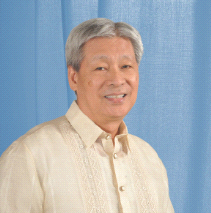
CAYETANO W. PADERANgA, JR.
Socioeconomic Planning Secretary and Director-General
National Economic and Development Authority