5.2 Monitoring and Evaluation
Similar to other projects, monitoring and evaluation cuts across the different phases of the PPP framework as presented in chapter 1 of this manual. During the development phase, indicators for success are identified and defined to gauge how the project will help address a development gap or local issue. As the project is developed and approved, the LGU is responsible for ensuring that contract provisions are duly implemented from the start of construction to the operation of the proposed project.
Rule 14, Sections 14.1 and 14.2 of RA 7718 - IRR explicitly states how PPP projects are to be coordinated and monitored. Administering, monitoring and evaluation are also subject to the guidelines of local and national approving bodies such as the sanggunian, RDC, ICC and NEDA Board.
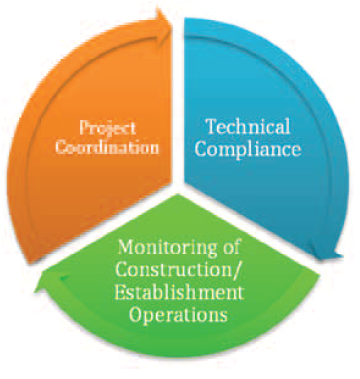
The issuance of Notice to Proceed by the local chief executive formally marks the beginning of the implementation phase. It is at this point that the LGU takes on the primary responsibility of coordinating PPP project-related activities, ensuring compliance by the private partner to the agreed upon technical specifications, and monitoring the construction and operations of the PPP facility.
Figure 2-11: Responsibilities of LGUs in PPP Project Monitoring
Since most PPP projects entail construction activities, it is imperative for the LGU to have a clear understanding of their monitoring role during this stage of PPP implementation, especially since (1) the quality of the construction works, especially adherence to approved specification, must be assured by the LGU; (2) unexpected events may affect project schedule, and the LGU must respond appropriately to problems or issues that may delay completion; and (3) the power to correct any deficiency or any divergence to the agreed upon specification rests with the LGU concerned.