We need to increase total public and private funding
As a proportion of GDP, spending on infrastructure has been higher in the last five years than in the preceding 20 years. However, fiscal pressures (especially the need to fund health, retirement and other social welfare programs) suggest that governments will struggle to maintain current levels of infrastructure expenditure in the medium to longer term.
Public sector expenditure on engineering construction as a proportion of GDP, 1987-2014
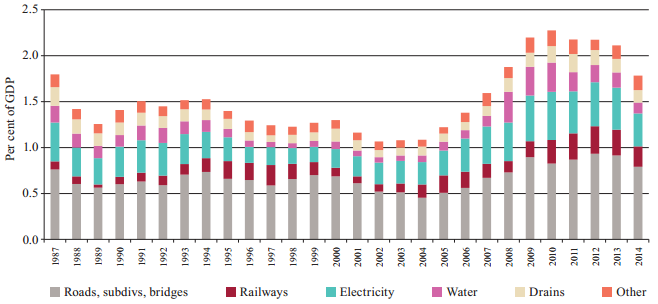
Private investment in infrastructure has grown, with more private owners and developers of infrastructure, including in the energy and resources sectors. Creating the conditions for further private investment is an important strategy in meeting future infrastructure needs.
Australia will have to increase the amount of funding available from both public and private sources, to maintain and grow our infrastructure networks.
Current funding arrangements are unsustainable, particularly for the transport sector, and will require reform. While users contribute a proportion of the cost of transport infrastructure through licensing and registration, fuel excise, public transport tickets and freight network access charges, governments still pay the lion's share.
The current system therefore relies on limited revenue sources (which in the case of fuel excise is likely to decline over time as vehicles become more efficient) and it does not ensure that the revenue is directed to transport outlays, new projects or improved performance of networks.
Providing more transparent links between user charges and expenditure on transport planning, investment and maintenance could provide governments with greater means of implementing a more effective road and transport-user charging model than currently exists.
Unless the funding issue is addressed by all governments, the level of service offered by our transport networks will decline. If there is no change, maintenance of existing assets would need to be cut back, and new projects aimed at maintaining or raising levels of service in our cities and regions would not proceed.