5.1.1 Ageing of the population
As the average age of Australians increases, we will need to address a range of related issues, including infrastructure provision.
The number of people aged 65 or older is projected to increase by 77 per cent between 2012 and 2031, from 3.2 million to 5.7 million. The population as a whole is set to grow by 34 per cent over the same period. Consequently, the ratio of those aged 18 to 64 (i.e. working age) to those aged 65 and older is projected to drop from 4.5 in 2012 to 3.2 in 2031.120
The Australian Government's 2015 Intergenerational Report forecasts that the average age of the population will increase over the next 40 years. Figure 16 illustrates how the ageing of the population will cause a dramatic increase in the number of Australians over the age of 65 by 2054-55.121
Figure 16: Proportion of the Australian population by age group as a share of total population - 2014-15 and 2054-55
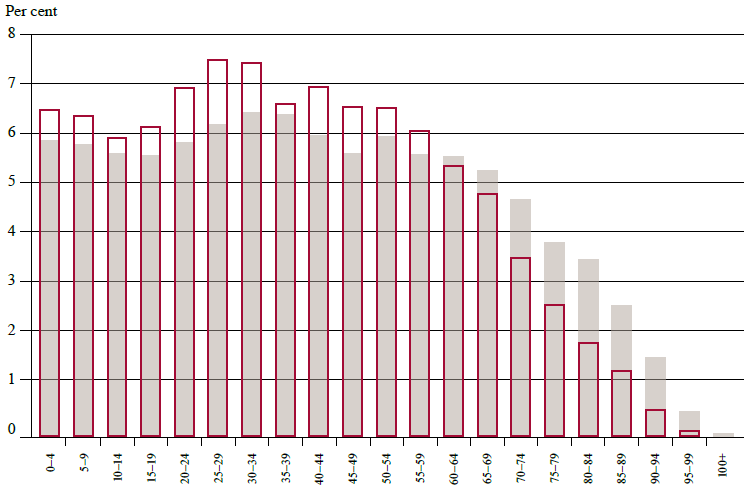
 2014-15
  2054-55
Source: Australian Government (2015a)
The ageing of our population will influence infrastructure planning. It is likely to result in more households in retirement and on fixed incomes, which has implications for capacity to pay at a time of slowing growth in the revenue base for government services. It may also lead to an increasing demand for public transport, if older Australians give up their driving licences.
We will need to consider how to ensure access to public transport, particularly for those who do not live near major transport hubs and face limited mobility. There is also a challenge in helping older people understand and use information available via modern communications, including transport information that will help people move around.
_________________________________________________________________________________
120. Australian Bureau of Statistics (2013c)
121. Australian Government (2015a)