6.4 Water
Water service providers in metropolitan areas, and in areas where state-owned service providers operate, generally provide a good level of service.
The levels of unplanned interruptions to water supply, and water losses through leakage, are indicators of the quality of maintenance in the water sector. Data presented in the National Water Commission's most recent report on urban water (for 2012-13) shows that the incidence of unplanned interruptions has remained largely unchanged since 2005-06. Similarly, water losses per service connection have remained more or less the same over that period. These are observations for the urban water sector as a whole; there is considerable variation between individual utilities.159
The Audit did not find any evidence of a systemic maintenance underspend in metropolitan areas, where water service providers tend to have large customer bases and good opportunities to recover their costs.
There is a risk of maintenance underspending in regional areas, where town water services are provided by local councils. In particular, there is evidence of a significant maintenance backlog for water, sewerage and drainage assets in NSW and Queensland. Research by the Productivity Commission in 2011 and the Regional Australia Institute in 2012 also point to skills shortages and underdeveloped asset management systems.160 Smaller rural areas, particularly those where the population is projected to remain static or fall, face particular water infrastructure maintenance (and associated water quality) challenges.
Maintaining water supplies and sewerage services to rural towns and remote communities presents a particular challenge. The cost of providing water and sewerage to remote communities is often comparatively higher than in other parts of the country, because of longer distances, smaller populations, and/or more extreme physical environments.
Bulk rural water service providers tend to be state-owned and subject to some form of independent economic regulation. The Audit did not find any evidence of an infrastructure maintenance gap in the bulk rural water sector.
Where costs are not fully recovered from users, state governments sometimes provide additional payments to the bulk rural water service provider to cover the revenue shortfall so that assets can be adequately maintained. Given the fiscal pressures facing state and territory governments, there is a risk they will face an increasingly difficult task in continuing these payments while balancing other priorities. This raises questions about the durability of maintenance arrangements for these networks in the medium and longer term.
Some rural water service providers in NSW, South Australia (SA) and WA are owned by growers. In these cases, there is evidence of maintenance being deferred during drought as a means of reducing costs at a time when revenue from water sales is low.
Maintenance needs in the water sector are likely to increase as a result of:
■ population growth;
■ a large capital investment across the country in the 2000s to deal with supply shortages imposed by drought. This investment boom targeted non-rainfall dependent sources such as desalination and recycled water infrastructure, which are more expensive to run and maintain than traditional rainfall-dependent sources such as dams;
■ existing infrastructure, e.g. sewer mains, reaching the end of its design life;
■ greenfield urban development, which will see the need for new water and sewerage assets;
■ a trend towards a more integrated and distributed water supply network in urban areas as water service providers tap new supply sources such as stormwater runoff and sewage;
■ demands for improved levels of service, particularly in regional and remote areas, where existing standards often fall below the national average and there is further to go to reach expected standards;
■ improvements to environmental and other regulations, which impose unavoidable costs on water service providers; and
■ climate variability and climate change, which will continue to be a key driver of asset renewals and maintenance expenditure in the water sector.
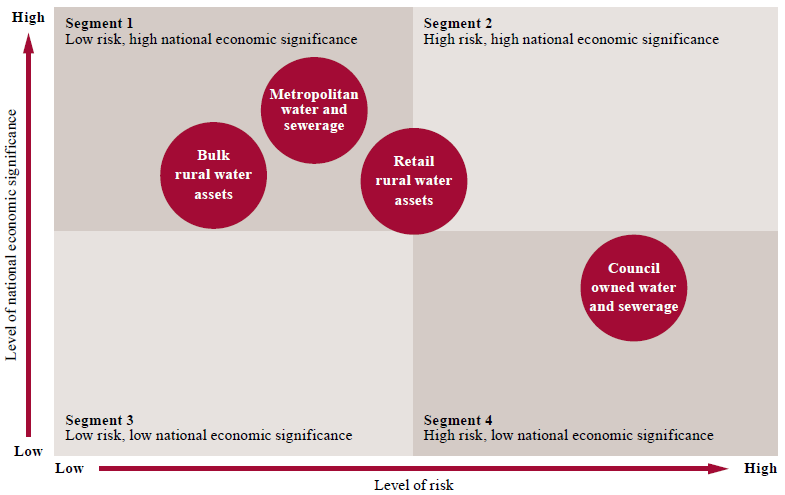
Figure 24 shows that there is little evidence of a systemic maintenance issue for metropolitan water and sewerage assets, nor for bulk and retail rural water assets. There is, however, evidence of underspending on maintenance where water and sewerage services are provided by local government.
There are isolated examples of maintenance expenditure being deferred by privately owned irrigation corporations to reduce costs during times of drought.
Figure 24: Assessment of maintenance in the water and sewerage sector
Source: GHD (2014), p. xii
_________________________________________________________________________________
159. National Water Commission (2014c), p.104, p.114
160. GHD (2014), p.45