Building intelligence on strategic suppliers
3.13 Government's influence is strongest in markets such as prisons and defence where it is the only buyer. However, many of these markets are dominated by a small number of large suppliers. The experience of dealing with G4S and Serco shows that such suppliers can become too important to fail. Government is exploring ways to reduce its reliance on such dominant suppliers. For example, the electronic monitoring contract has now been retendered using the 'Strategic Integrator and Towers Model' advocated by the Cabinet Office. This allows smaller companies to bid. We intend to report on how government manages its markets for government services later in the year.
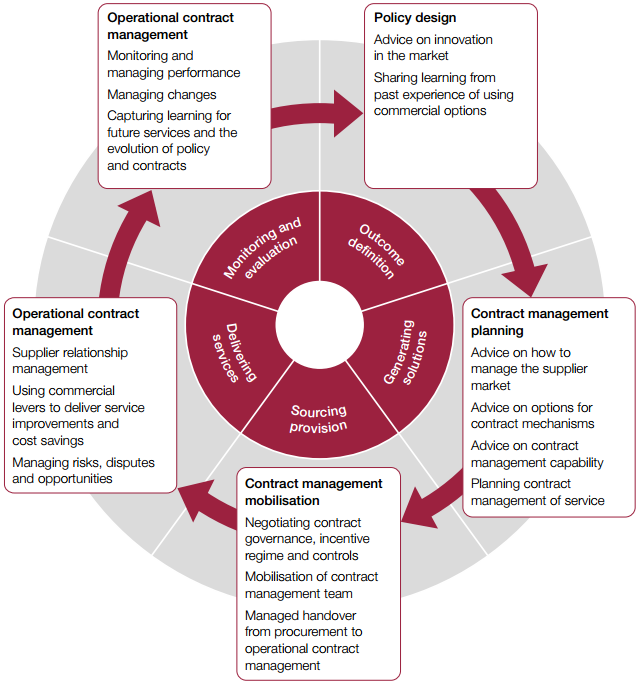
Figure 11 Contract management and the commissioning cycle
Source: National Audit Office |
3.14 Meanwhile, government needs to be able to rely on its strategic suppliers to behave in the taxpayers' interest. Government thus needs to be much more inquisitive about the internal operations and culture of such companies. It can then use this information to influence them and to set clear expectations. It should know the company's:
• Leadership
What are the leaders' espoused values? What do they pay attention to within the business? How do they focus on the government's (their customer's) needs?
• Business model and strategy
How does the company make its money? How much profit does it make through new contracts or generating additional revenues on existing contracts? Is it dependent on growth or making a steady return? Is it aiming to expand into new markets? What opportunities is it after?
• Acquisition policy
How and why is it acquiring smaller companies? How does it manage the integration of new businesses into the group? Does its growth mean that its control environment is overly stretched and reliance cannot be placed on management?
• Control environment
How does accountability work within the organisation? How do senior executives know that operations are working? How do they know what is going on across their diversified business?
• Promotions policy and staff incentives
How are managers incentivised? Is a focus on government's (their customer's) needs rewarded? Is misbehaviour punished?
• Staff engagement and productivity
How motivated are staff? How focused are they on what they do? Do they see the company as a good place to work?
• Internal audit and whistleblowing policies
How do senior management know that corporate policies are implemented? How do they learn of problems? Are these shared with the government as customer? Are staff encouraged to raise issues?
3.15 Government has started to build its understanding and strengthen influence in its relationships with suppliers. In our 2013 report Managing government suppliers 41 we outlined the benefits of the Cabinet Office crown representatives who were appointed to manage the relationship with 40 strategic suppliers across government. The crown representatives are now supported by the CCS, which coordinates and maintains intelligence on some of these strategic suppliers. However, the information collated by the CCS is only a fraction of the intelligence we believe should be brought to bear in such relationships.
3.16 Some individual departments are also improving management of key suppliers. The Ministry of Defence has 13 strategic suppliers (reduced from 31 due to resource constraints) where relationships are overseen by board-level sponsors. The Ministry plans to appoint a commercial contracting officer who will lead major supplier management across the organisation. The DWP has had an established strategic supplier approach in its Welfare to Work division, which it is currently spreading to its ICT division.
____________________________________________________________________________________________________
41 Comptroller and Auditor General, Managing government suppliers, Session 2013-14, HC 811, National Audit Office, November 2013.