Cabinet Office expected significant benefits by creating CCS
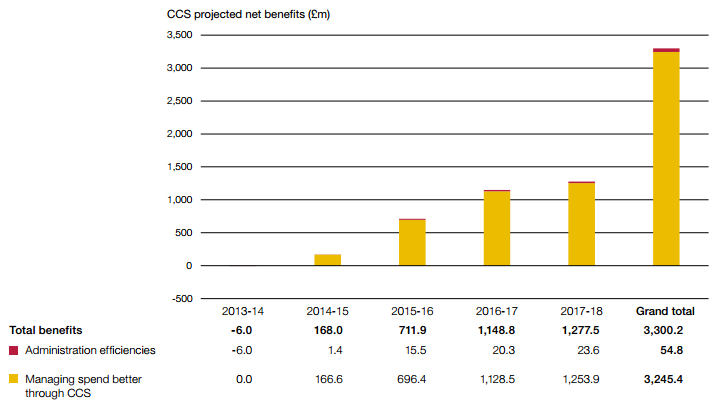
1.15 The Cabinet Office did not prepare a full business case for CCS, but it did expect the new organisation to achieve significant benefits. In 2014, CCS forecast that the government could make net savings of £3.3 billion by reducing administration costs, moving to a shared services model and achieving better value for money from buying common goods and services (Figure 6). CCS expected procurement staff from different departments to transfer to the former Government Procurement Service, which employed around 500 staff. By April 2016, CCS would employ 1,030 staff. Across government, there would be around 400 fewer staff due to efficiencies in the buying of common goods and services.
Figure 6 |
Cabinet Office projected that most benefits would result from savings on common goods and services
Cabinet Office expected £3.3 billion net benefits; 98% would come from better managing spend
Note
1 The net benefits for each year are the difference between the total future costs and spend and the baseline costs and spend.
Source: Crown Commercial Service |
1.16 By April 2018, once procurement services had transferred from other departments, the Cabinet Office expected CCS to directly manage £13.4 billion of government spending on common goods and services. Departments would no longer carry out any activities related to the buying of common goods and services themselves. The Cabinet Office also expected the wider public sector to make more use of CCS frameworks (Figure 7 overleaf). It thought that these changes would lead to better value for money.