CCS service standardisation and integration
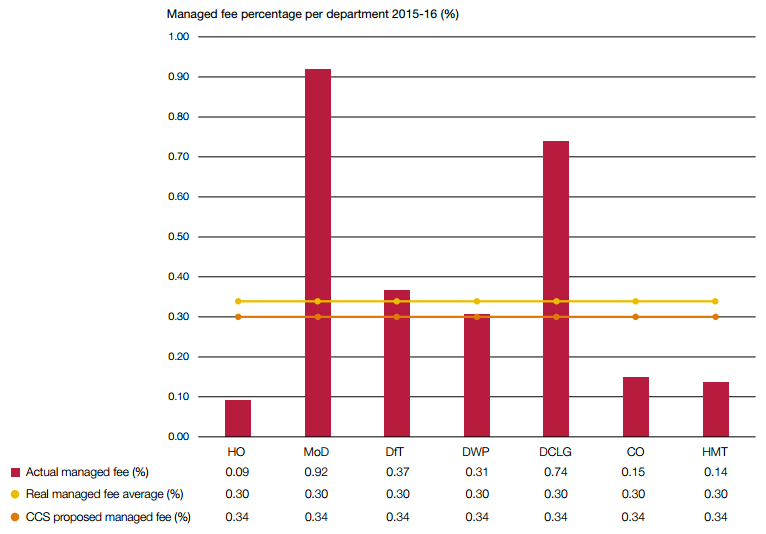
2.19 CCS was initially formed by the merger of the former Government Procurement Service, the strategic commercial functions of the Cabinet Office, and parts of department procurement teams. Prior to the transition, departments had different models for the delivery of procurement services. For some departments, the central buying function would undertake all procurement-related activities. For other departments, the role was more decentralised, with teams dispersed throughout the department and its arm's-length bodies having autonomy over part of the procurement process. When it launched CCS the Cabinet Office decided to accept this variability. CCS created service agreements with departments which reflected this diversity of services and then negotiated fees which significantly varied across departments (Figure 16). The Cabinet Office expected CCS to subsequently standardise and integrate the services.16
2.20 CCS began to integrate and commence the standardisation of its services only in June 2016. On its launch CCS agreed to carry out a number of varying activities in the same way as departments had previously carried them out. CCS did not make changes to standardise these activities so that the same activities could be run for multiple departments. At present, departments receive a range of bespoke services from CCS. For example, CCS:
• manages mail and courier contracts for the Home Office;
• maintains a database of third-party spend for the Department for Communities and Local Government;
• provides a helpdesk service and booking advice to the Ministry of Defence for travel; and
• maintains a complaints and issues log on behalf of Cabinet Office.
2.21 In Part Three we discuss the review of CCS operations. As part of that review, CCS is standardising the services it will offer and intends to hand back 53 activities to departments and transfer some of the staff carrying out these activities back to departments. However, CCS has not yet agreed the detailed implications of its new standard service offer. CCS will need to ensure that it works closely with departments in doing so.
Figure 16 |
Departments pay significantly different fees to CCS
In 2015-16, MoD and DCLG paid more than the other departments
Notes
1 When launched, CCS proposed to charge its central government customers a fee equivalent to 0.3% of spend which it managed on their behalf.
2 HO = Home Office; MoD = Ministry of Defence; DfT = Department for Transport; DWP = Department for Work & Pensions; DCLG = Department for Communities and Local Government; CO = Cabinet Office; HMT = HM Treasury.
Source: Crown Commercial Service |
________________________________________________________________________________
16 This approach to service transition is sometimes known as a 'lift and shift' of disparate operations to a new service unit. The new unit is then responsible for standardising and improving services.