GDS spending
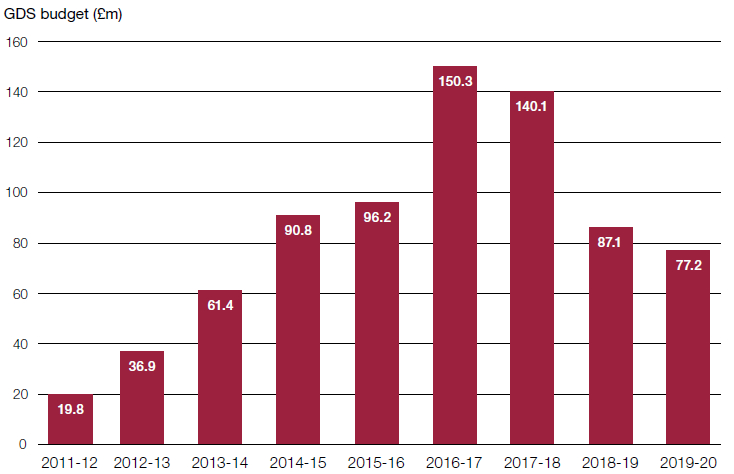
1.14 GDS has grown rapidly since 2011. Its budget increased from £37 million in 2012-13 to £96 million in 2015-16 (Figure 3 overleaf). Although its budget increased to £150 million in 2016-17, GDS expects to underspend against this by £45 million, largely because of lower than expected take-up of centrally provided services.
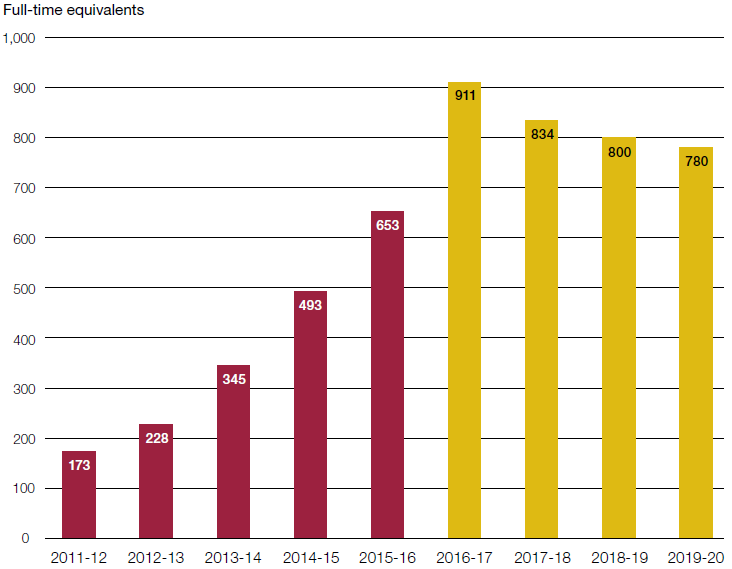
1.15 Increasing budgets have resulted in rapid growth in staff numbers. GDS staff numbers reached 653 by the end of March 2016. Headcount is forecast to increase further, to 911 staff by the end of the 2016-17 financial year (Figure 4 on page 19). This rapid expansion has meant that GDS has had to rely heavily on interim staff. GDS estimates that interim staff made up around 20% of its workforce until March 2015. Use of interims peaked at 41% between January and March 2016, to support work on central services following the 2015 Spending Review.
_________________________________________________________________________________________________
Figure 3
Government Digital Service budget, 2011-12 to 2019-20
GDS's budget increased to over £150 million in 2016-17
Notes
1 GDS received funding of £455 million in the 2015 Spending Review, covering expenditure for the four years from 2016-17.
2 Of the £54 million increase in funding between 2015-16 and 2016-17, £43 million (80%) is ring-fenced for Verify, Government as a Platform and Common Technology Services.
3 Verify is expected to become self-funding in 2018-19. Of the £53 million decrease in GDS's funding between 2017-18 and 2018-19, two-thirds (£36 million) relates to removal of revenue programme funding for Verify.
Source: Government Digital Service budget data
_________________________________________________________________________________________________
_________________________________________________________________________________________________
Figure 4
Government Digital Service staff numbers, full-time equivalent
GDS numbers have increased rapidly since it was set up
| Actual full-time equivalents at the time of the 2015 Spending Review |
| Budgeted full-time equivalents at the time of the 2015 Spending Review |


Notes
1 Total full-time equivalent (FTE) staff include civil servants and interim staff. The number of interim staff prior to 2015-16 is based on an estimate by GDS, as it does not hold data on this.
2 The planned reduction of 131 staff between 2016-17 and 2019-20 reflects a reduction of 170 FTEs in GDS's 'core' programmes (all GDS's activities except three ring-fenced programmes: Common Technology Services, Government as a Platform and Verify) offset by an increase of 39 FTEs in its three ring-fenced programmes.
Source: National Audit Office analysis of Government Digital Service data
_________________________________________________________________________________________________
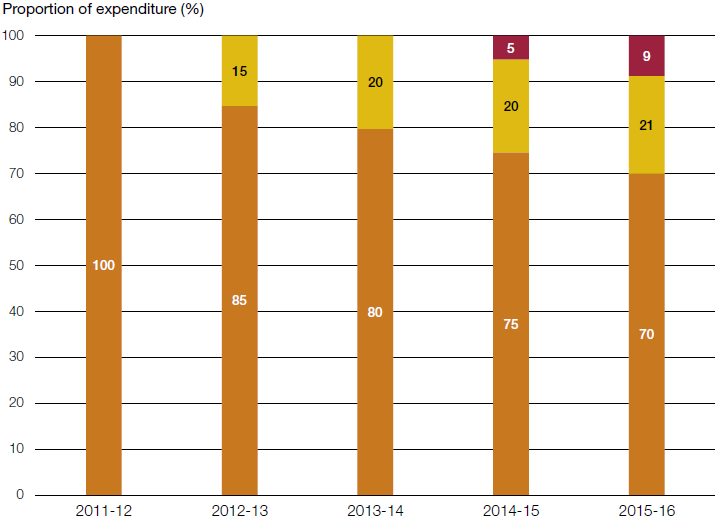
1.16 GDS has been spending more of its money on developing and running central services such as Verify, an identity assurance platform (Figure 5). In November 2015, GDS received £455 million for the 2016 to 2020 spending review period.
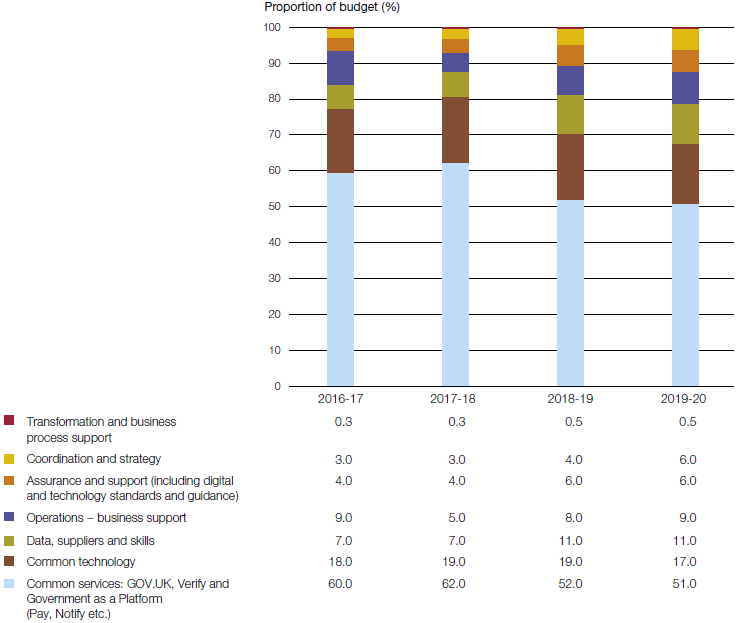
1.17 GDS will continue to develop common services. From 2016-17 to 2019-20, over half of its budget is allocated to common services (Figure 6).
_________________________________________________________________________________________________
Figure 5
Government Digital Service expenditure, 2011-12 to 2015-16
GDS started to spend money on common services (excluding GOV.UK and Verify) in 2014-15 through work on its Enabling Strategy
| Enabling Strategy |
| Identity Assurance Programme |
| Core GDS spend |

Notes
1 GDS set up what was called the Enabling Strategy programme in October 2014 to develop business cases for building services at the centre that can be used across government. In September 2015, work on Enabling Strategy was subsumed into work on the Government as a Platform programme and Common Technology Services. Expenditure on common services via the Enabling Strategy excludes spending on GOV.UK.
2 The Identity Assurance Programme became known as Verify when it was launched (in public beta − publicly available but still being tested) in October 2014.
3 It is not possible to analyse expenditure in further detail, or using the categories in Figure 7, as before 2016-17 GDS did not split its staff costs into specific programmes.
Source: Government Digital Service management information
_________________________________________________________________________________________________
_________________________________________________________________________________________________
Figure 6
How Government Digital Service has allocated its budget, 2016-17 to 2019-20
GDS will use over half of its budget to build and maintain common services for government
Notes
1 The proportion of GDS's budget allocated to common services falls in 2018-19 because it is assumed that GOV.UK Verify will become self-funding from this year.
2 Reflects the net position after departmental income.
3 GDS plans to spend £260.7 million of its £454.7 million budget (57%) on common services (GOV.UK, Verify and Government as a Platform) between 2016-17 and 2019-20.
4 Numbers may not sum due to rounding.
Source: National Audit Office analysis of Government Digital Service budget data
_________________________________________________________________________________________________