Problems with flying training
1.6 Our 2000 report, Training new pilots, reviewed training for fast-jet pilots and identified areas for improvement.3 Specifically:
• Core training was taking too long due to a shortage of instructors and suitable training aircraft. Reductions in the size of the Royal Air Force had also led to training delays.
• Increased training costs linked to student failure rates and delays in students moving through training.
• Quality targets were poorly formulated and there was no credible mechanism for getting views from operational training units on pilot quality.
1.7 We recommended that the Department:
• improve its information on flying training to inform decision-making;
• develop its understanding of the interactions and dynamics of the training system; and
• refine the metrics and targets used to manage flying training.
1.8 We set out the information and measures the Department needed to improve flying training. A Royal Air Force review of flying training,4 also in 2000, similarly identified areas for improvement (Figure 3 overleaf).
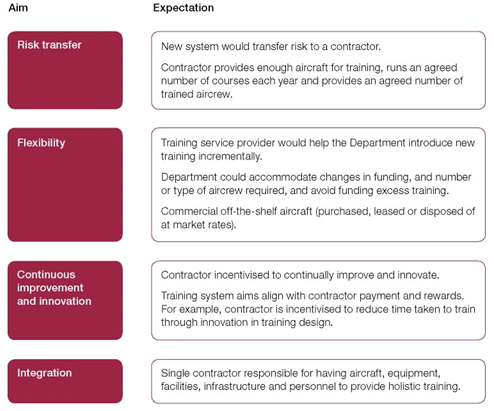
1.9 The Department recognised flying training was complicated, disjointed and inefficient. In particular, there were significant waiting times between courses, and obsolete training equipment did not reduce the amount of training undertaken on expensive front-line aircraft. The Department concluded that new core training, run by an external training provider, would bring benefits (Figure 4 on page 17 and Figure 5 on page 18). The external provider would have no role in aptitude testing or operational training.
Figure 3 Findings from previous reviews of military flying training | |
National Audit Office, Training new pilots, 2000 |
|
Issue | Recommendation |
Suitability of aptitude testing to predict training success. | Explore how to improve aptitude tests' ability to identify the skills needed for fast-jet, helicopter and multi-engine pilots, to make early and accurate decisions on streaming trainees. |
Quality of information on training activity and outcomes. | Collect information on training activity and performance in a standardised way, and make it accessible, to help analyse training activity. |
Quality of information on training costs. | Capture training costs, and their major elements, to monitor cost-effectiveness and give sound analysis of possible improvements. |
Managing training. | The 'process owner' should actively review training performance overall and set common targets from analysing current and potential performance. |
Royal Air Force, Project 08, 2000 |
|
Issue | Recommendation |
Suitability of aptitude testing to predict training success. | Develop aptitude tests to help identify specific skills needed from future aircrew. |
Ability to train pilots effectively, for future advanced aircraft types. | Identify suitable training aircraft to move training from front-line aircraft to less expensive aircraft. |
Simulated training. | Explore opportunities for simulated training to complement live flying. |
|
|
Sources: Comptroller and Auditor General, Ministry of Defence, Training new pilots, Session 1999-2000, HC 880, National Audit Office, September 2000; Royal Air Force, Project 08 - A strategic study into the conduct of flying training from 2008 and beyond, May 2000 | |
Figure 4 Aims of new core training
Source: National Audit Office |
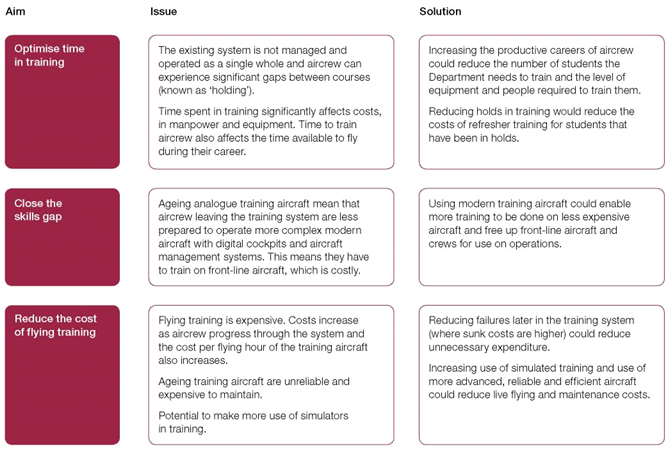
Figure 5 Role of the external training provider
Source: National Audit Office |
______________________________________________________________________
3 Comptroller and Auditor General, Ministry of Defence, Training new pilots, Session 1999-2000, HC 880, National Audit Office, September 2000.
4 Royal Air Force, Project 08 - A strategic study into the conduct of flying training from 2008 and beyond, May 2000.