An Example of a Possible Alternative
A possible alternative to the Nassif Building outcome exists in the example of the General Post Office building, just across the National Mall in Washington, D.C. In this instance, GSA-the largest of the federal government's commercial real estate management agencies-outleased a former office building for which it could not muster appropriations support to renovate and modernize.
Originally built to house the Post Office Department in 1832, the General Post Office is one of the oldest official buildings in Washington, D.C. It was designed by the same architect as that of the Capitol and Washington Monument. In disrepair and largely abandoned by the federal government in 1988, GSA chose to offer it for lease to a private partner.
In 2000, the Kimpton Hotel & Restaurant Group signed a long-term lease for the property with the aim of converting it into an upscale hotel. The Hotel Monaco opened in 2002 and heralded the revival of the newly named Penn Quarter neighborhood.
The Hotel Monaco/General Post Office exemplifies the potential for PPPs to preserve historic federal buildings and provide necessary space. An alternative model would have had a private developer, similar to Kimpton, lease the building from the federal government, renovate the building, and lease it back to the federal government at a market rate. In this model, the private partner can leverage tax incentives-such as the historic preservation tax credit-and private sector contracting and building management can speed project delivery and quality. Yet the federal government-and ultimately the taxpayer-retains the underlying ownership and an equity stake in the increased value of the asset.
Those who oppose this type of partnership cite the relative cost of capital between the federal government and the private sector, as well as the lack of private party risk as a means of creating incentives for cost-effectiveness and quality. These are very real concerns, but these differences could be offset by a variety of flexibilities available to the private sector. The Advisory Group concluded that too many of the general statements made about one approach or another are based on assumptions and received wisdom. The best approach would be to evaluate alternatives, solicit market input, and make decisions on estimated net present value that are based on actual project data and experience.
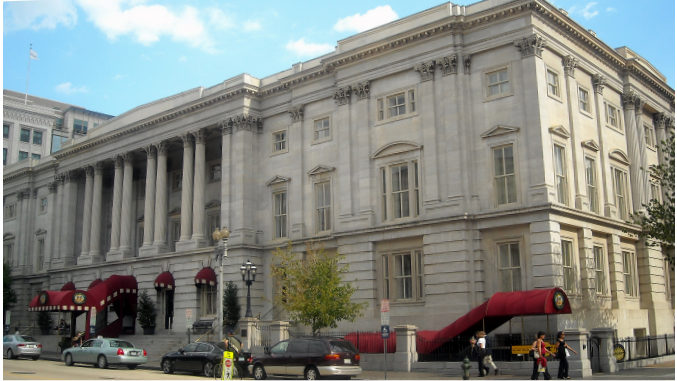
Hotel Monaco in Washington, D.C.
©APK yada yada/Wikimedia Commons