4 Alternative delivery models
The second solution is to consider an alternative delivery model for the initial project.
The objective of the second solution is to come up with a contracting model that provides as many of the benefits of the PPP model as is possible, without the associated lack of flexibility.
To do this, you need to eliminate the causes of the lack of flexibility, namely:
• the large number of parties during the operation phase; and
• the long-term nature of the operating phase.
The Newcastle light rail project provides some insight into what is possible in this regard, as do the Melbourne train and tram franchises.
On the Newcastle light rail project, Transport for NSW has entered into three separate contracts of significance. The first two cover the design and construction of the light rail system and the supply of the light rail vehicles. Once built, these assets will be leased to, and operated and maintain by, a private sector operator that Transport for NSW has separately engaged under a short term operating franchise contract.
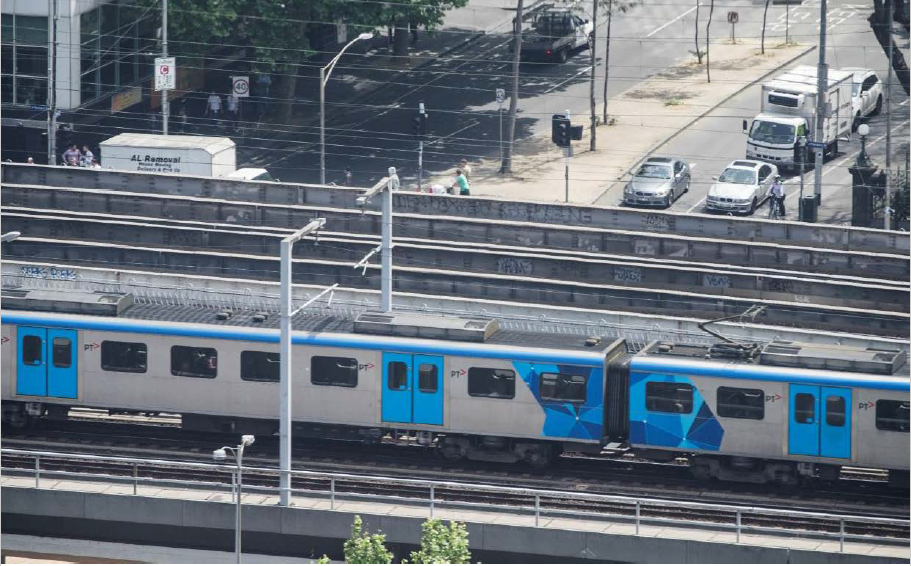
The operating franchise contract for the Newcastle project incorporates a performance based service payment regime, similar to that found in a PPP contract. But the term is shorter which provides more frequent points at which a new operating franchise contract, covering the operation of an expanded network, can be competitively tendered. A similar approach applies in Melbourne, where the process of re-tendering the operating franchise contract every seven years provides regular opportunities to obtain competitive pricing for the operation and maintenance of network infrastructure changes.
Transport for NSW has recently announced that it will adopt a similar model for the Parramatta light rail project. The civil works are to be procured under a D&C contract, with the vehicles and rail systems to be separately procured, together with the operation and maintenance services, under a separate Supply, Operate and Maintain contract. The term of the second contract is yet to be communicated to the market.
Under these alternative non-PPP models, the build phase contract(s) could take many forms. A fixed price D&C contract with an output specification would provide a similar risk allocation and opportunity for innovation as a PPP contract. Alternatively, other forms of build phase contract (i.e. alliance, managing contractor, delivery partner model etc) can be used if government has a different risk appetite or objectives, especially if there is no private finance during the build phase.
If government wants the rigour that private finance brings to be applied to the build phase, this could be achieved, at least in part, by holding back payment of a significant component of the build price until all commissioning tests have been passed and build phase defects have been closed thereby requiring the SPV or its D&C contractor to finance these costs in the meantime.18
Maintenance responsibilities can also be incorporated into the build contract. The maintenance term could be aligned with the term of the initial operating franchise contract, but with an option for the maintenance term to be extended out to, say, 15 years, to drive a whole of life approach to the assets.
There is no reason why government could not tender each contract in parallel. The preferred operator could be selected shortly before the selection of a preferred build phase contractor, and involved in the finalisation of the build phase contract. Indeed, the operator could be selected on the understanding that it will enter into and administer the build phase contract, and manage the interface risk between the two contracts.
The build phase contracts for subsequent extensions can be competitively tendered when government is ready to proceed, thereby ensuring value for money in relation to build phase costs.
Eliminating the use of private finance during the operation phase avoids the need to obtain the agreement of equity investors and debt financiers (or to incur the cost of buying them out) when the operating franchise agreement is amended to incorporate the extension.
If the opening of an extension is timed to coincide with the expiry of the Operating Franchise Agreement, the need to obtain the agreement of the incumbent operator can also be avoided.
____________________________________________________________________________________________
18 Limited recourse finance will bring more rigour than finance raised by the build phase contractor on a corporate finance basis, but limited recourse finance will also be more costly.