Fiscal Positions
Countries across the region face the need for fiscal consolidation to narrow fiscal deficits and stabilize government debt. Although commodity prices have recovered some ground, commodity exporters (especially oil exporters, such as Angola and Equatorial Guinea) are still running sizable fiscal deficits (figure 1.6). | FIGURE 1.6: Fiscal Deficit
Source: World Bank staff estimates. | Even though
|
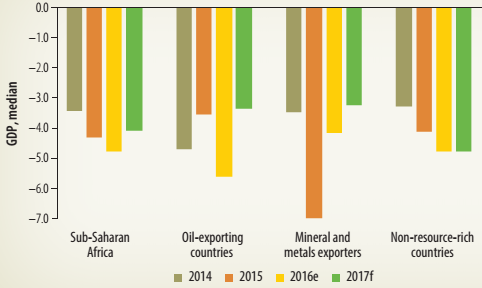
The fiscal balances of non-resource-intensive countries worsened in 2016, reflecting elevated investment spending levels. Widening fiscal deficits and, in some cases, sizable exchange rate depreciations have resulted in rising public debt levels in the region. Large non-concessional borrowing for infrastructure development has led to high debt servicing costs in several countries. South Africa's 2017/18 budget reaffirms the government's commitment to fiscal consolidation, with the introduction of a new personal income tax bracket to mobilize additional revenue. It remains to be seen whether the stance of fiscal policy will be affected by political developments. Among oil exporters, Angola's 2017 budget targets a stable fiscal deficit, but the risks of large expenditure overruns in the run-up to the election this year remain high. In Nigeria, the government plans to increase infrastructure spending, financed in part through borrowing. Elsewhere, Ghana's 2017 budget signaled a slowdown in fiscal consolidation, which could increase fiscal risks, given limited fiscal space. Mozambique's budget points to a moderate increase in spending. Reflecting the continued weakness of fiscal balances, caused by the fall in commodity prices and the continued upward trend in government debt, the region's rating outlook in 2017 remains negative.