4.3.2 Financing Availability Payment P3 Projects
Figure 4-2 identifies the funding and financing sources that have been used on the nine availability payment P3 concessions that have reached financial close in the U.S. These projects closed between 2009 and 2015 and had access to all current federal credit programs. Seven of the nine P3 concessions have used TIFIA loans. While TIFIA support is common among availability payment concessions, it is used with slightly less frequency compared to real toll P3 transactions. Both projects that did not use TIFIA loans did have PABs. An additional three projects used both PABs and TIFIA.
Four of the nine availability payment P3 projects have included commercial debt in their financings. This is a higher frequency compared with real toll projects and is likely related to the reduced financial risk profiles associated with availability projects. All four projects using commercial debt also involved TIFIA transactions. To date, no availability payment projects have paired commercial debt with PABs.
As with real toll P3 transactions, all availability payment financings have included private sector equity. However, compared with the 14 real toll projects, the average level of equity is significantly lower with availability payment projects: 9 vs. 22 percent. This higher gearing-the debt to equity ratio-is possible because availability payment projects are less risky. As a result, lenders do not require private partners to contribute as much equity in order to make loans supporting availability payment projects.
Figure 4-2: Availability Payment P3 Sources of Funding
I-595 Corridor Roadway Improvements
|
| Port of Miami Tunnel
|
Presidio Parkway
|
| Goethals Bridge Replacement
|
I-69 Section 5
| ||
|
|
|
I-4 Ultimate
|
| Pennsylvania Rapid Bridge Replacement Project
|
Southern Ohio Veterans Memorial Highway
|
| Ohio River Bridges - East End Crossing
|
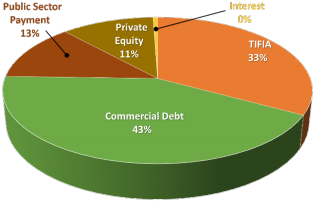
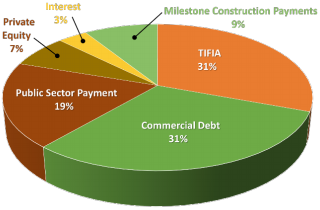
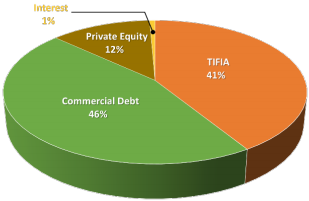
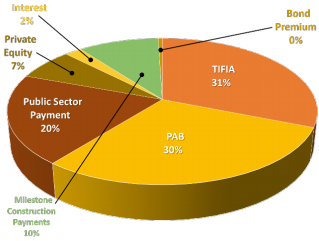
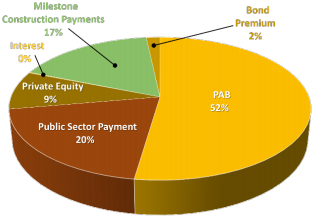
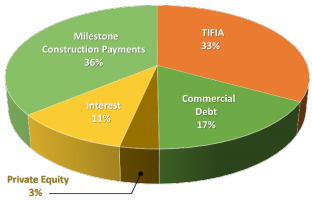
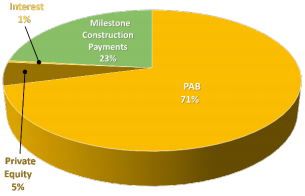
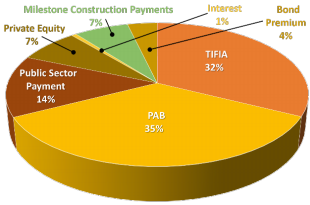
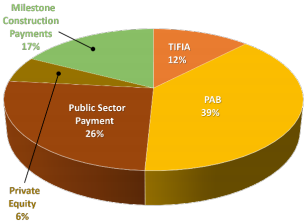
With eight out of the nine availability payment projects, their public sector sponsors have made upfront payments to their private partners, either in the form of an upfont public contribution, milestone construction payments, or a combination of the two. Given that these projects are funded entirely with public money, this is a deliberate choice on the part of their public sponsors. By doing so, they reduce the amount of the annual availability payments they will pay throughout the life of the concession. It is interesting to note that availability payment concession financings tend to include a greater share of public sector funds compared with real toll concessions: 20 vs. 12 percent on average. This trend also reflects the fact that agencies sponsoring availability payment projects assemble their funding from a variety of sources, some of which may be limited for use on capital construction and others restricted to support maintenance needs.
As with real toll projects, availability payment financings can also include modest amounts in interest payments and bond premiums.