2.11.2 Relevant definitions
There are a number of definitions that relate to Subcontracts and different clauses and regimes under the PV Standard Project Deeds apply to different groups of Subcontracts and Subcontractors.
Diagram 9 below shows the interrelation between the different subcontract definitions.
Diagram 9
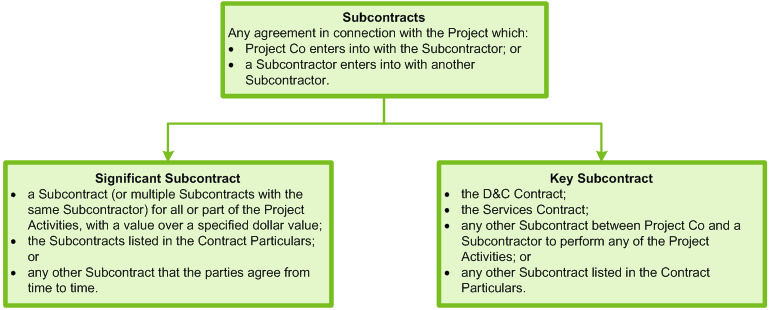
Key Subcontractors are critical to the success of the Project. The State will have a Subcontractor Direct Deed with each of the Key Subcontractors to ensure the State can continue to engage services of that Key Subcontractor on the same terms if the Project Deed is terminated. All Subcontractors engaged by Project Co are Key Subcontractors. Some Subcontractors engaged below this level may be Key Subcontractors. For example, where the Services Contractor providing maintenance services subcontracts another Subcontractor to perform the 'soft' Services such as cleaning and catering.
Significant Subcontracts are those Subcontracts under which the State requires visibility over the appointment of the Subcontractor as well as the terms of their appointment. These Subcontracts cannot be changed without State approval. Significant Subcontractors often play an important role in the success of a Respondent's Proposal but are typically one step removed from Project Co, being a subcontractor to the D&C Contractor or the Services Contractor. Their work will often be important to the success of the Project. While they will vary from project to project, examples of Significant Subcontractors include designers and manufacturers of key aspects of the Project (such as vertical transportation).
The State may require the Significant Subcontractor to enter into a direct arrangement with the State via a Subcontractor Direct Deed although this is not mandated in the Project Deed as it is agreed directly with the Key Subcontractors.
Subcontractors are defined to be any person who enters into a contract in connection with the Project Activities with Project Co or any Key Subcontractor or Significant Subcontractor. The State has limited the extent to which it reaches down the supply chain in recognition of the administrative burden that this might otherwise create.