The purpose of performance monitoring and reporting
Monitoring, reporting and subsequent control actions can only be really effective if the government party can relate them to project objectives. The government party can then implement control actions to ensure the private party delivers the required project outcomes in the future.
Monitoring and reporting should be ongoing activities that feed information into an assessment process and provide a coherent basis for exercising control actions. In the context of Partnerships Victoria projects, these control actions are, broadly:
• assurance that services are available and being provided as anticipated;
• decrease the quantum of service payments (abatements for under-performance);
• change management (discussed in detail in Chapter 12);
• increase monitoring and/or reporting requirements;
• trigger default scenarios and consequent government party actions under the project deed (including remedies, such as the replacement of a specific service provider) (discussed in detail in Chapter 8); and
• contingency planning for ensuring continuity of services and potential government party step-in under the project deed (discussed in detail in Chapter 8).
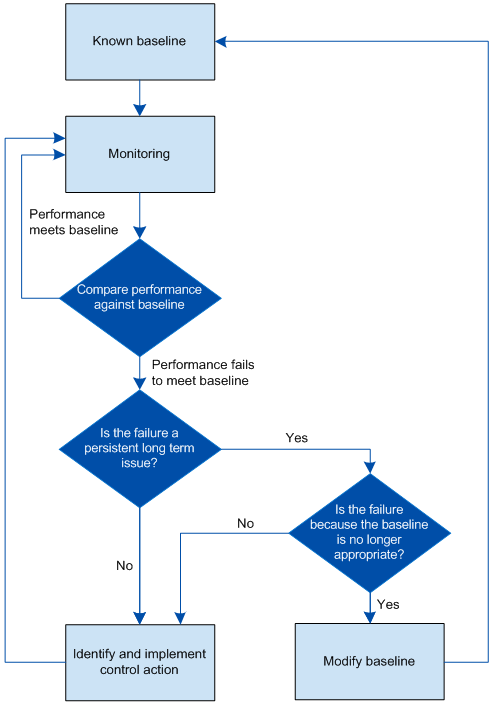
In some instances, circumstances may change over the life of the project so that a specified baseline for performance monitoring (e.g. a required level of service) becomes difficult or impossible to achieve, resulting in a persistent failure of the private party's performance to meet the baseline. Depending on the underlying reason for persistent failure, the government party may consider whether the baseline remains an appropriate measure of performance, or whether it should be modified to reflect a different level of performance in the changed circumstances. A modification will only be appropriate if the private party's failure to meet the existing baseline is not detrimental to the end users of the services.
As the service delivery requirements have been extensively considered and agreed to by the private party and the government party during the procurement phase, the contract director should only consider modifying the service delivery requirements set out in the project deed where the State receives an offsetting benefit, such as a reduction in the quantum of service payment, to maintain or improve the government party's value for money outcome for agreeing such modification.
Figure 11.1 is a flowchart illustrating the role of performance monitoring.
Figure 11.1: The performance monitoring process
Contract management actions taken in the early days of the service delivery phase set the basis and expectations for later behaviour. The contract director therefore needs to appropriately implement the service performance monitoring arrangements from the beginning of the service delivery phase.
The contract director is responsible for ensuring that services are delivered in accordance with the project deed. This responsibility requires the contract director to use the steps available within the project deed to incentivise the private party to improve their performance, if the agreed standards are not being met. The abatement arrangements are a central part of these incentive arrangements.