Modified Theoretical Models Considering the Characteristics of PPPs
Here, we modify the previous theoretical model to reflect the characteristics of a PPP in the Republic of Korea. Let T be the amount that a financial investor pays the construction investor when it takes over the project after the completion of construction. Usually a financial investor takes over a project after a couple of years of operation, and T is determined by the number of users during the initial operation years, as well as the bargaining powers of both parties. Suppose a construction investor knows the bargaining powers of each side and the function of N(e) when the investor determines effort levels a and e. The following is the construction investor's maximization problem:
|
| (13) |

Let us assume that T is a linear function of the number of users N. Then, the optimal effort levels can be derived by the following first-order conditions:
| d'1(aK) = 1. | (14) |
|
| (15) |
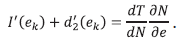
Equation (14) is the same as equation (8), which is the first-order condition under a traditional procurement. This means the level of effort to decrease construction costs under a PPP is the same as that for a traditional procurement, and greater than the first best level. Even for PPP contracts, a construction investor will sell a project and not care about the operation cost, thus choosing the effort level ak without considering the operating cost.
Proposition 5: The effort to lower construction costs in a PPP contract is greater than the first best level of the effort; that is, ak = atp> a*.
The left side of equation (15) is the same as equation (9), while the right side is different. This means that, as the right side comes closer to 0, the quality-enhancing effort level of a PPP comes closer to a traditional procurement. If N is not sensitive to the effort level or T is not sensitive to N, then the effort level is close to zero. Therefore, under certain conditions, the effort levels chosen by a construction investor is the same as for a traditional procurement.
Proposition 6: If N is not affected by e, or T is not affected by N, then the effort level under a PPP contract is zero; that is, ek = etp = 0.
Propositions 5 and 6 show that PPP contracts do not guarantee efficiency improvements and under some conditions, we do not achieve it. Therefore, introducing a PPP system is not enough to enhance procurement efficiency, and bundling contract effects should lead efficiency improvements under a PPP system.