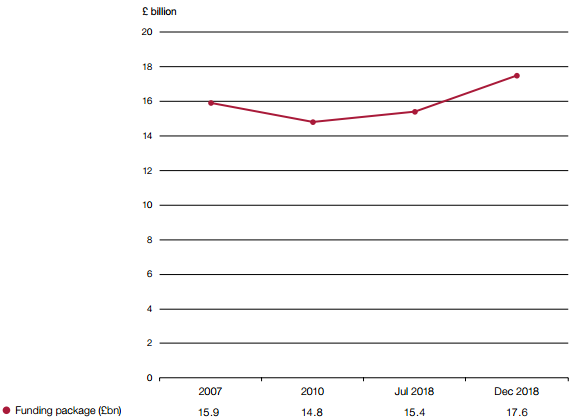
Funding for the project has increased by £2.8 billion to £17.6 billion
In 2007 the government announced a funding package from project sponsors of £15.9 billion for the infrastructure elements of the project, including improvements to the existing network to be delivered by Network Rail.
In 2010 project sponsors reduced available funding to £14.8 billion to reflect savings identified and revised cost estimates.
Reflecting cost pressures, in July 2018 the Department announced that project sponsors had agreed an additional £590 million of funding, bringing the overall funding to £15.4 billion.
Reflecting delays and further cost increases, in December 2018 the Department announced that it would loan £1.3 billion to the Greater London Authority (GLA). The GLA intend to repay this loan via London's Business Rate Supplement and from the Community Infrastructure Levy. In addition the Department announced a £750 million loan could be made available to Transport for London (TfL) as additional contingency. The GLA has also agreed to make an additional cash contribution of £100 million. The total funding package for the infrastructure project is now £17.6 billion.
The final cost of the programme is not yet known.
The upfront capital cost of rolling stock and depot is around £1 billion.
The capital cost of the trains was funded directly by TfL and is outside the main funding package shown in Figure 7. In January 2018, TfL announced its intention to sell the rolling stock and to lease it back from the buyer, in order to release capital to invest in the enhancement of other tube lines.
This transaction has not yet been concluded.
| Figure 7 Funding package
Source: National Audit Office analysis of departmental information |