Ascent-provided training devices
2.6 The MFTS design assumes that students will undertake a proportion of their training in simulators, rather than in live flying. Ascent is responsible for procuring these devices and for ensuring they are available. It has sub-contracted this responsibility.
2.7 When fully implemented, the MFTS provides helicopter training with an estimated 50:50 split between live flying and simulators, with one course solely on simulators.
In 2018-19, no students completed their helicopter training. Full introduction of this training has been delayed following Ascent's sub-contractor providing a flight simulator 18 months later than expected. As a result, the Department withheld £6 million from Ascent and delayed a further £20 million payment. To continue training, from January 2019 helicopter students have been trained in handling skills entirely through live flying, with 16 students starting between that date and July 2019. Ascent has borne this additional training cost. The Department has estimated that this equates to £160,000 per student. It now expects to receive the simulators in August 2019 and fully operate helicopter training from December 2019.
____________________________________________________________________________________________
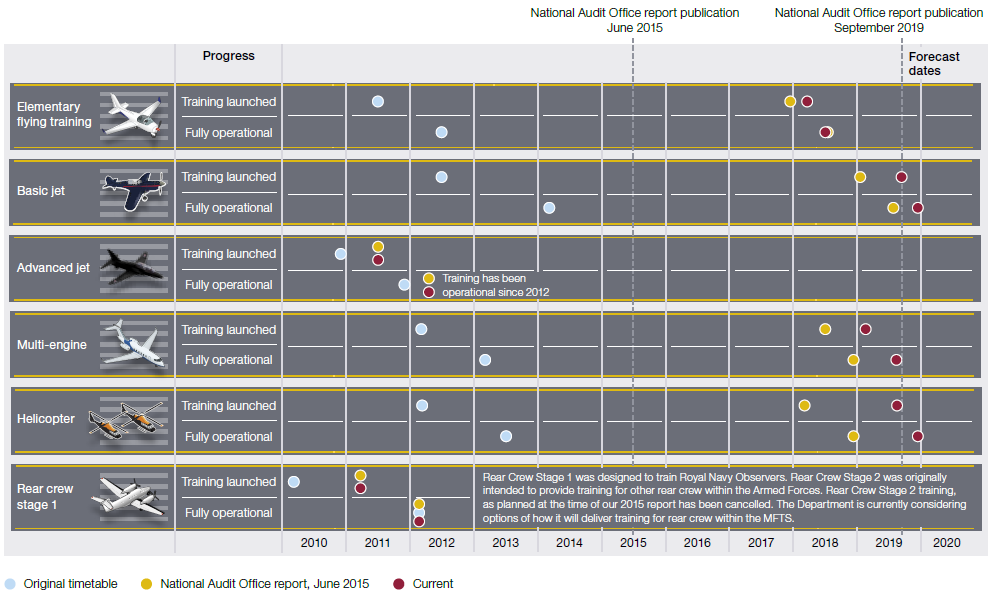
Figure 8
Progress introducing the Military Flying Training System (MFTS), July 2019
The Ministry of Defence (the Department) expects all training components to be in place from December 2019
Note
1 The fixed-wing contract with Ascent covers elementary flying, basic jet and multi-engine training. The Department agreed separate contracts for advanced jet, helicopter and rear crew training.
Sources: National Audit Office analysis of Ministry of Defence information; Comptroller and Auditor General, Military Flying Training, Session 2015-16, HC 81, National Audit Office, June 2015
____________________________________________________________________________________________
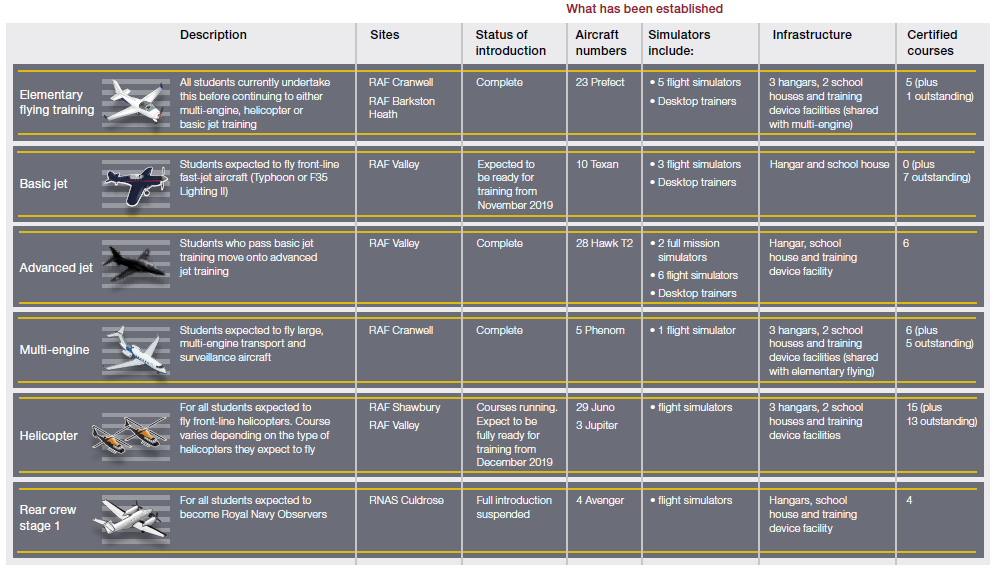
Figure 9
Training components introduced as part of the Military Flying Training System, July 2019
Ascent has introduced most of what it needs to provide for the system
Notes
1 Certified courses include those developed to train both instructors and aircrew.
2 Simulators include flight simulators that allow students to experience flying; full mission simulators allowing students to practice complex training missions; and desktop trainers so students can familiarise themselves with flying.
3 Some rear crew training will take place on the Phenom aircraft at RAF Cranwell.
Source: National Audit Office analysis of Ministry of Defence and Ascent information
____________________________________________________________________________________________