1. Introduction
| Project identification is the first stage of a project life cycle and precedes project preparation and procurement stages. It is a crucial stage in which the public entity seeks to identify the needs of the community for provision of public services along with its quantum, duration and the best procurement approach to fulfilling those needs. The process of project identification typically has two parts: one is the conceptualisation of the project along with clarity about what social need it will meet and another is the formation of the team that will manage it. |
|
| Project Identification Stage addresses: • Whether there exists a pressing need for the project? • Whether all possible service delivery options have been considered for the project? • What are the benefits of constituting a cell within the department for the project? • What goes into the pre-feasibility study? • Why is it advisable to hire advisors and how are they hired? |
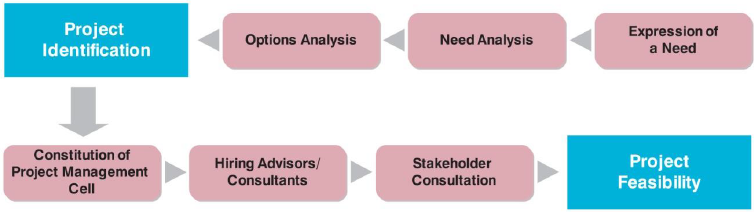
The various activities that form part of project identification (expression of need, need analysis and options analysis) and the activities that happen after this identification (stakeholder consultation, hiring of advisors and constitution of project management cell) are set out in the diagram below.
Project identification starts with identification of the need for the project and the options which can address the need. During this process economic analysis of each of the options is undertaken to determine whether or not the project is beneficial to society.
Much of what is discussed in this module is relevant to all projects, immaterial of whether they are proposed for development under a PPP or a traditional procurement framework. This is especially true for the section on need analysis. It is only in the 'options analysis' stage that PPP options are considered. In other words, public entities should not disregard this section for non-PPP projects.